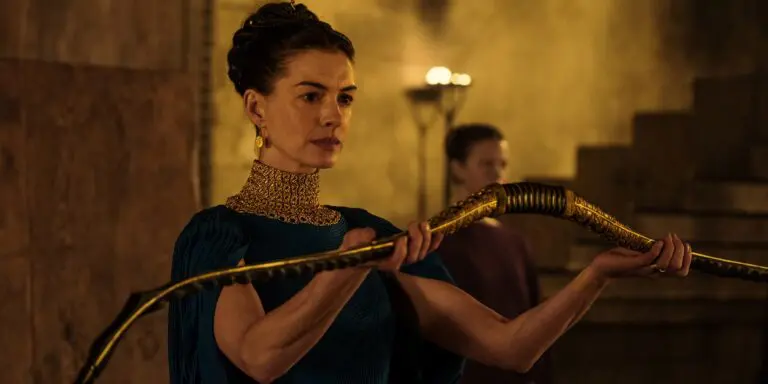

Being Heumann is the latest film from Sian Heder, the Oscar-winning writer-director of CODA.
Key Insights
- Casting directors Bernie Telsey and Adam Caldwell prioritized authentic disability representation, discovering talented performers who had little or no previous acting experience.
- The casting process emphasized actors’ personalities, emotional expression and ability to respond to direction rather than their credits or number of lines.
- The film demonstrates how inclusive casting practices can create opportunities for underrepresented actors and introduce casting professionals to talent they may not have previously encountered.
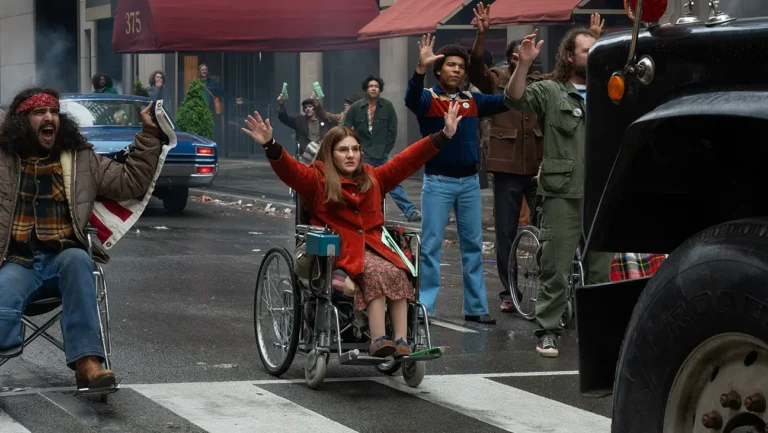
Based on the memoir by disability rights activist Judy Heumann, the film chronicles the historic 28-day occupation of San Francisco’s Federal Building by disability rights activists in 1977. Starring Ruth Madeley as Heumann, the movie brings this pivotal moment in disability rights history to life through a commitment to authentic representation.
A major part of that authenticity comes from casting disabled actors, many of whom had little or no previous professional acting experience.
Casting directors Bernie Telsey and Adam Caldwell assembled an ensemble of performers portraying real-life activists, with a remarkable resemblance to the people they represent. Photos of the original activists appear in the film’s closing credits, highlighting the care that went into the casting process.
The casting directors spoke with Casting Networks from their New York City office about discovering new talent, approaching auditions differently and what actors can learn from the experience.
Why Was Authentic Disability Representation Important to the Casting of Being Heumann?
Obviously, the decision was made right from the start to cast authentically. What was that conversation like?
Bernie Telsey: Yes, that was Sian. That was right from the top.
Adam Caldwell: It predates us. Sian likes to tell the story about how when she heard about Judy’s story, heard about Crip Camp, she read her book and reached out to Judy to say, “I would love to make a movie about you.” Judy said, “I was [planning on] making a decision on this in the next 24 hours. If you can meet me at five today, you can be in the running.” This was before CODA had come out. She had made CODA, but it hadn’t been released yet.
BT: She liked the email that she got from Sian, but didn’t know [her] work.
AC: Sian specifically said, “I would want to cast this authentically,” and that was one of the things they bonded about.
BT: It was always baked in, which was lovely, and I imagine Judy was not sure that would be the case. We all can name a million films where that was not the case, and that was very important to Sian. So much so with the 25 other characters. She wanted to be authentic, not just in the casting, but to who those real people were.
She had now spent two years working with Judy, interviewing many of the people who were around the protests and still alive. To her, this was a movie about each and every one of those people, and all the parts were as big as Judy. Even if it was very easy for us to go, “They only have six lines. Can we just, you know, make it a little easier on us?” (Laughs) And thank God, no, because look at the results.
How Did Casting Directors Find Actors Who Resembled the Real-Life Activists?
I love the fact that the photos were included in the end credits, showing the real people from the ’70s.
AC: Those are a lot of photos that we had on our walls as we were going out.
BT: I love that you got that, too. Because some people don’t, and they think, “Is that from the shoot?”
The first one I noticed was Andrew Pilkington. I said, “Hey! They cast people who look just like the real people!”
AC: Oh, yeah. These people were rock stars. They’re heroes. This isn’t one event. They changed America and the world by doing this. We really wanted to honor them in ways that their family members who are still around can see and be like, “Oh my God, that’s them.” Or, that’s their essence.
BT: That’s my brother. That’s my nephew. That’s my uncle.
AC: That’s the way they were. Those are the people that made these changes.
BT: I always think of entertainment, or making movies, or doing theater, as such a collaborative art form, right? Those of us who work in it, we know how important every job is and every person’s contribution. And yet, here’s a movie that’s saying that same thing, and every one of those people in that room are as important as Judy, and I’m going to tell that story, and that’s what was so great about it.
That’s one of the things that I responded to. Every part, even someone with a single line, is pivotal.
AC: Certainly, you could count lines, but it was clear in talking to Sian, everyone was going to be together every day of this three-month shoot, and she was going to be capturing behavior activities.
Just because they didn’t have a line there doesn’t mean that she wasn’t going to be focusing on them at any given time, and building this ensemble of people that were our principal roles, plus all the background folks that some of you got to see over and over again, that was exciting.
How Did Being Heumann’s Casting Directors Discover New and Inexperienced Actors?
Bernie, you joked about saying to Sian, “Can you make our job easier?” When it came to finding these actors, Ruth Madeley is well established, but most of the others are novice actors.
AC: Yeah, we didn’t know exactly how this was going to go. We knew that all these characters were really specific. There were also plenty of people that were part of it who weren’t featured as a main character that might have been historically there. We were always wondering if we were going to need to pivot, if we were going to need to say,
“We’re not getting close enough here, what else can we do? Can you accommodate someone that we find that’s super special that wasn’t actually the person in this historical event?” Sian was clear, saying, “I mean, maybe, but I really want it to be these people.”
BT: It just motivated you to keep looking. So much of casting is we’re supposed to pride ourselves on the knowledge that we have from going to the theater, from watching movies and television. We’re supposed to know who all the people are that we should be seeing for this particular role. This is the opposite kind of project.
It’s going to be about the process of casting that’s going to help us find all of these people. Once you knew that we’re going to lean into the process much more than we would normally do, and together we’re going to find the results. What a great thing to learn about so many wonderful actors that you just did not know, and feeling guilty that I didn’t know them.
AC: And then feeling guilty when we didn’t have room to cast them, even though we had such a big cast. We met so many special people, and it feels crazy, because for a lot of people, this was their chance. They might not have ever gotten as close to being in a project of this scale, and then to have to say we can only choose one to play Ed Roberts. We can only choose one to play Cece. It’s heartbreaking.
I would think that now these people are on your radar, and as more representational projects come through, you’re able to refer back to these same people.
BT: We cannot wait, actually. Either for a project to want that, or for us to be able to suggest that.
What Do Casting Directors Look for When Auditioning First-Time Actors?
What was the process of finding the actors, especially the amateurs? Was it the same process as working with experienced actors?
BT: It was, but what made it different was that we were going to spend a lot more time with them to make them feel comfortable, to make them feel they could share themselves, especially since it wasn’t about a line count. It was really about behavior, essence, personality. Sian had directed us to direct these sessions from a sense of bringing people out.
Listening to their story. Like, “How did you know about Judy Heumann? What do you know?” We were asking so many personal questions without it being private, so that we could see who they were and who they are. This was a case that Sian would respond to people by the stories they were telling, and I think that was one of the things that was different.
AC: We were just giving grace. Just because someone doesn’t know how to do an audition off the bat doesn’t mean that they’re not talented. We’re just trying to let people be their best and see if they respond to things that we say, and how we think that Sian would be able to direct them if we give them a suggestion to try something a different way, or think about it a different way.
We would bring people back more than we might on other projects, but not as a bad thing. Just to let people grow in a process to the place where Sian would say, “No, I can work with them. They’re a collaborator. There’s someone that I can play around.”
BT: That’s exactly right. “Can I get them to a place where they’re comfortable playing with me?” And that was pretty great.
Why Do Authentic Performances Matter More Than Dialogue?
Do you have favorites? Either actors or moments that stand out for you?
BT: Andrew Pilkington.
AC: He’s amazing.
BT: I watched that movie again just last week, and I found myself thinking, “How is he so telling, and how does it feel like he’s talking throughout the whole movie?”
I had the same reaction. I could understand everything he was doing, and he doesn’t speak a word.
BT: And that’s what was tricky, right? Because, on paper, you have a person with this disability who’s not talking. I’m being literal here for a second, but they’re not talking. So, I would think someone who’s used to not talking is also maybe harder to express, and how am I going to get them to express on a Zoom the way the three of us are doing right now?
Then he rolls in, and he’s so telling, and sure, it might have taken a few sessions, but he was so expressive, and he was so willing to share that he just popped out of the Zoom. Now it’s about directing him the way you need this character to be, but Andrew was so vivid that the rest was easy. The rest is direction and rehearsal and whatnot.
AC: And it might sound simple, but the idea that Hale communicated with this pointer with this board is clearly not the way anyone currently communicates. So trying to figure out how to make that feel right, how to make it feel authentic in the way that we need it to be, and seeing Andrew figure it out as we would work with him, or in the middle of the process of auditioning for Hale, it was Sian or her associate Anne who came up with this video that was actually of Hale, with Ed Roberts interpreting for him.
So all of a sudden we see, “Oh, he did sometimes communicate verbally.” But then he would ask someone to help interpret for him as well as using the board, and it was about figuring out the way that Andrew felt comfortable and could express all of that. All of a sudden, one time it clicked, and that was it. This is actually how it works.
What Can Actors and Casting Professionals Learn From Inclusive Casting?
This is a unique project in a lot of ways. What do you two able-bodied men take away from working on this project, and how do you use it moving forward in your career?
BT: [Gets choked up] Sorry. Oh, it’s emotional. What I want to learn from this is that there’s so much possibility out there, and how do I bring that into my personal life? How do I bring that into what I do?
AC: I think it’s just realizing that the world is a really rich place, and when we find people that we haven’t met before, and get to showcase them and how they might be different than us, it’s very rewarding. The best part of our job is being able to spotlight someone who hasn’t been given that chance and, especially when it was a hard thing to do, to find them to make it all happen. It’s the best part of what we do.
BT: If you really want to talk about what’s the next step, I mean, how do you not want to see this full cast all at the SAG Awards? That’s a room filled with the industry who can make a difference and put them in other stories. Whether it’s through writing, whether it’s through casting, whether it’s through acting, we can’t be afraid of difference. And I hope that this movie shows that.