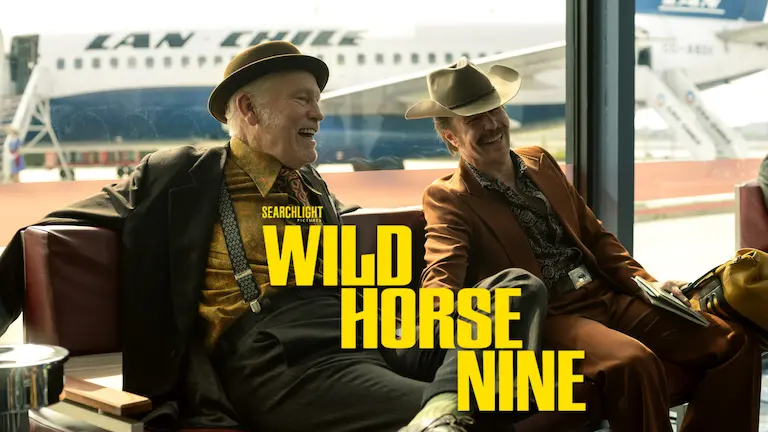

As Hollywood gears up for awards season, Oscar-winning filmmaker and seven-time Academy Award nominee Martin McDonagh has entered the conversation with his latest feature, Wild Horse Nine.
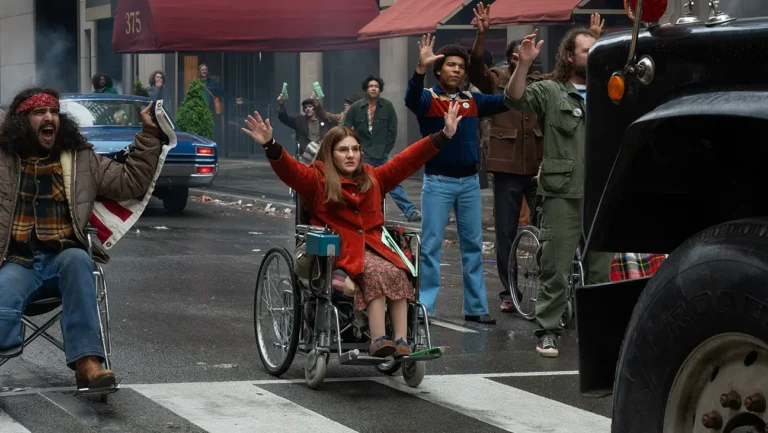
Set in 1973 ahead of the Chilean coup d’état, the story follows two CIA operatives, played by Sam Rockwell and John Malkovich, who travel from Santiago to Easter Island.
There, the longtime partners must wrestle with their pasts, conflicting loyalties, and student activists with plans of their own. Malkovich took home the Volpi Cup for Best Actor at the Venice Film Festival and was recently nominated for a Gotham Award, while McDonagh picked up a Gotham nomination for Best Original Screenplay (winners will be announced November 30).
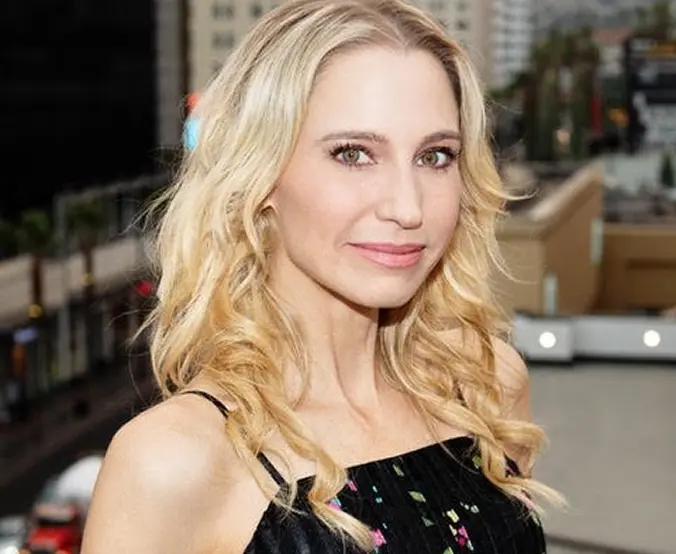
Finn, a BAFTA nominee for Everything Everywhere All at Once and a multi-Emmy nominee for WandaVision and The Mandalorian, sat down with Casting Networks to discuss her long-running creative shorthand with McDonagh, building an ensemble around Rockwell, and the deep research required to cast Malkovich against type.
Key Insights
- Casting director Sarah Finn explains how she uncovered John Malkovich’s rarely seen vulnerability to make the case for his role in Wild Horse Nine.
- Finn reveals how extensive research and collaboration with local casting professionals helped her assemble an authentic Chilean ensemble.
- Drawing on her longtime partnership with Martin McDonagh, Finn explains why chemistry, character depth and creative compatibility are essential to successful casting.
This is your third film with Martin. How has your creative relationship evolved since those early collaborations?
We go back over 15 years, and I absolutely love working with him. Having that history informs the process of casting. We both come from theater. Martin is a celebrated playwright, and one of our great filmmakers. Our sensibilities align, and I’ve developed an understanding of what kinds of actors can bring his words to life.
Sam Rockwell also starred in Seven Psychopaths and Three Billboards. How did his role here differ from your past work together, and how has he evolved over the years?
Sam is a theater actor and had done one of Martin’s plays (2010’s A Behanding in Spokane on Broadway). He and I go back to 2010’s Iron Man 2. Tom Waits, who is in this film, was also in Seven Psychopaths, so there is a lot of connectivity and shared history in all of this.
Sam was attached when I came aboard the project, so it became about how we build this world around him. His role in this film is so different from other roles Sam has played. I love what he does here. I’m so moved and excited to see him in this role, which is a more mature version of him than we’ve seen before.
In what ways does that maturity show up in his performance?
It’s more restrained. There’s a lot of subtext. I feel like it’s literally the definition of a best supporting actor, because he holds the emotion. He holds the audience. He is able to, in silence, tell us so much about what’s happening.
When you have a central performance grounded in that kind of restraint, how do you begin selecting the actors around him?
I understand Martin’s sensibility, and I understand who Sam Rockwell is as an actor. One of the challenges I faced was matching that and elevating it even more. We wanted to surround Sam with actors he could really spar with, who would not only challenge him, but complement him in ways that would tell us more about his character.
That dynamic comes through with Parker Posey as his wife, Margie. She only has a few scenes in the film, and they take place entirely over the phone with Sam. What made her right for this role?
Parker Posey tells us a lot about their life and who he is. We instantly understand their marriage. Parker injects the film with so much humor. We made a list of actresses for that role, but Parker was somebody I really wanted to advocate for because of the combination of talents and qualities that she brings to the screen, and the way that works with Sam.
Sam and John operate essentially as a two-hander throughout the film, and their dynamic is wonderful to watch. What were you looking for in that older figure counterpart to Sam?
Somebody who feels dangerous, that you believe had a violent background, that can be offensive and rude, but is also funny, and who by the end of the film you’re going to care deeply about.
This role subverts the screen persona audiences typically associate with him. What made you envision him in a part like this?
This role was different for him. I really needed to be able to articulate why and how I saw John in this role, because I don’t think he’s someone that you instantly associate with a certain kind of warmth or vulnerability.
When an actor’s existing body of work doesn’t readily showcase those specific qualities, how do you convince a director?
Usually, what my team and I do is pull every piece of prior work of the actor that we can to paint a picture, creating video evidence of how we believe this actor can play the part. I will say that there are not a lot of warm, vulnerable and open performances that he has done.
I was a little bit stumped in the process [and thought], “How am I going to show this quality that I really need to show?”
Where did you look to uncover that side of him?
I started combing through interviews he had given to find that quality in him as a person. There was one interview where I found a glimmer of him talking about his family, which he doesn’t really do. I was like, “That’s it! That’s exactly the moment that I need to draw out and expand on!”
Of course, when you meet him and talk with him, he is the loveliest human being. But in terms of his work experience, it hadn’t been the kind of role he’d done before. We extrapolated these certain moments and showed Martin those interviews, as well as his previous work, which people are well-versed in. Then we had the two of them meet and talk and expand on that promise.
That level of advocacy really shows how far a casting director goes to champion an actor they believe in for a role that may not be obvious to others.
Matching him to the role, having him and Martin get to know each other, having him and Sam work together, and ushering that casting choice through is something I’m incredibly proud of. I would say John exceeded even my wildest expectations of what he could bring to this character.
Let’s talk about the Chilean cast, including Mariana di Girolamo as college student and leftist activist Monica. Did you head over to South America for the casting?
I did not get to go there, but we had started preparing months earlier. I had gotten the script and immediately started a huge Chilean research document, which we sent to Martin, which was about 20 or 30 pages of actors that we looked into. With Mariana, I had been lucky enough to meet her back in 2019 after her Chilean movie Ema came out.
When I was reading Martin’s script, I will admit that she’s one of the first people who popped into my mind because all of Martin’s characters have to exhibit this incredible range, where they can be very tough, even abrasive in one moment, and then very funny in the next, and then they disarm you.
His characters are constantly surprising you, so the actors have to as well. Mariana had done this really bold, incredible performance in Ema, and then I met her, and she’s quite poised and warm and lovely in person. She certainly made an impression on me, but we always do a search.
What was the search, and how did it lead back to Mariana?
The search involved looking widely. We had Brazilian actors, we had actors from Venezuela and Argentina. We were really looking in the region. But the more I read the script and got steeped in the story, and in talking to Martin, I thought it was so important to cast a Chilean actress.
This is about Chilean history. We need to feel the identity. We need to feel the emotion, the idealism. That all needs to be baked in to authentically tell the story. So, we asked Mariana to read.
What were the primary considerations when auditioning actresses for Monica?
The role of Monica was really important. We knew casting that role was going to be a challenge, because she had to be the heart of the film in terms of the Chilean story. Mariana is a very established actor in her own right, but to come into an iconic American cast at this level and hold the screen with Malkovich, and do it in a language that’s not native to her and understand Martin’s humor and the musicality of his writing, was a tall order.
Not only that, but we needed somebody who could have that idealism of a young person and then make the turn that she makes. It’s a really challenging turn. As an audience, we have to believe what she’s capable of by the end of the movie. Getting that right felt critically important.
Did you collaborate with a local casting director on the ground to tap into regional talent?
Roberto Matus came on to help us and was able to find talent, like Paola Giannini, who plays Rosa, the hotel housekeeper. When I’m casting in another country, we often keep a huge database. We’re always looking at award winners. For example, Ailín Salas [who plays Monica’s friend Alicia] was a Best Actress Silver Condor nominee [for the Argentine film Lulu].
We’re tracking these things, but it’s not always easy to locate somebody and ask them to audition. That’s where we really rely on that relationship with our local casting director.
A casting director’s work is often misunderstood because so much of it happens behind closed doors. Do you feel that lack of visibility influences how people perceive the craft?
I do think it’s misunderstood, and it’s hard. Part of the secrecy around casting is that it protects the filmmakers and the actors during what is a really vulnerable process. People are putting themselves on the line, trying on a role and seeing if it fits. The art of casting involves so many subtleties and nuances, but what people might not understand about it is that it’s incredibly thoughtful.
What goes into that thoughtful evaluation when determining whether an actor is the right match?
If we have an idea on day one, we are going to test it out every which way. The chemistry with the director has to be right, because if the actor and director aren’t like-minded creatives, it’s probably not going to be a great fit. It has to work with the writing; it has to work with where that actor is at in their life, and whether they are ready to take on this role.
With Malkovich, I cannot imagine anyone else playing that part, and I can’t imagine a more perfect time in his life for him to bring this character to the screen. All these things are rotating around, and it’s a matter of trial and error and thorough conversations.
That’s just for one character!
And then we have to match the ensemble. In Wild Horse Nine, it does feel like Parker Posey, Tom Waits, John Malkovich, Steve Buscemi and Sam Rockwell all inhabit the same universe. Mariana and Ailín also blend in with it beautifully. That takes a lot of careful thought and really diligent work.
After casting the Marvel Cinematic Universe films, including Spider-Man and The Avengers, and Legendary’s Monsterverse’s Godzilla and Kong, when you transition to a lower-budget, character-driven project, is there a different headspace you have to enter?
I’m guided by the filmmaker. When I’m working with Martin, my headspace is Martin McDonagh, his vision, and what kind of actors are going to work with his writing, in his world. As casting directors, our job is to know everybody we can know and match the best actor to the role.
Whatever the story is, or whatever the genre is, I want to have a thousand actors at my fingertips, so that we can experiment. It’s a bit like cooking in the kitchen and trying different ingredients. Can this work? Can that work? Does this feel right? Does it not feel right? We have to have this expansive vocabulary to meet the moment with any film.
For Finn, casting Wild Horse Nine was about finding actors who could bring McDonagh’s distinctive characters to life while honoring the story’s historical and emotional complexities. From championing Malkovich in an unexpected role to discovering talent across South America, her approach combines research, collaboration and creative instincts that go into great casting. All supporting the importance of finding not the right actor, but the right actor at the right moment.