
Auditions have changed dramatically over the last few years.
Self-tapes have become a standard part of the casting process, virtual auditions connect actors and casting teams across different locations, and emerging technology is reshaping how performances are submitted and reviewed.
But the future of auditions isn’t simply about replacing the casting room with a camera or introducing AI into the process. It’s about expanding how actors can showcase their work while navigating new expectations, opportunities and challenges.
Key Insights:
- Auditions are evolving: Self-tapes, virtual auditions and in-person sessions are all part of modern casting, making adaptability increasingly important for actors.
- AI brings opportunities and challenges: As technology becomes more integrated into casting, actors should understand their rights and how their image, voice and performances may be used.
- Performance remains the priority: Regardless of the audition format, authentic storytelling, strong acting choices and preparation are what help actors stand out.
What Will Auditions Look Like in the Future?
Self-tapes, in-person auditions and virtual sessions are increasingly being used alongside one another depending on the production, role, casting team and stage of the process. The industry has already adapted to remote auditions, with self-tapes allowing casting directors to consider actors who may not live in the same city (or even country) as the production.
You might receive sides and have just a few days to submit a self-tape, depending on the production and applicable audition rules. You might be asked to attend a virtual session where casting can give you adjustments in real time. Or, you could still find yourself sitting in a casting room, working directly with the creative team.
The format may change, but the fundamental requirement remains the same: casting needs to see what you can do with the material. As the changes occur, you have to be adaptable. Less than ten years ago, many actors were initially hesitant to adapt to self-tape submissions. By accepting the change, with insight into what the possibilities offer and the positive attributes they possess, you can use that same approach when exploring the future of auditions.
Are Self Tapes Replacing In-Person Auditions?
Self-tapes have become an established part of the audition process, rather than a temporary solution, and SAG-AFTRA described self-tapes as having become an industry standard in its guidance for performers. Self-tapes have become a permanent fixture in casting, with SAG-AFTRA establishing protections around submission deadlines, page limits and technical requirements for covered productions.
The advantages include being able to see more actors without asking everyone to travel in, and giving creative control back to actors who put themselves on tape. But even with the ability to do multiple versions of a read, the audition room still has its place.
There are a multitude of things that are difficult to replicate remotely. Mainly the chemistry between actors, seeing how someone responds to direction in real time, and the energy created when actors are working together. Self-tapes that are overproduced can often feel manufactured to the point of sacrificing basic skills, such as listening and responding.
Think about both self-tapes and in-person auditions as the opportunity to showcase different skills, rather than competing systems.
What Does This Mean for Self Tapes?
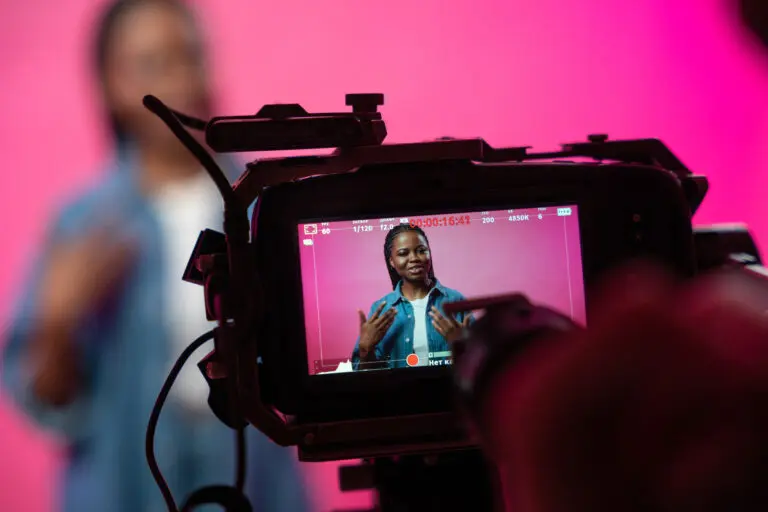
The technical side of self taping will continue to matter, but actors shouldn’t confuse technical quality with the quality of the performance. Your framing, lighting and sound should be clean enough that it doesn’t distract from what you’re doing. The aim is to support the performance, not to strive for technical perfection.
Casting director Tiffany Little Canfield has emphasized that her focus is on the actor and the story being told, with the performance and the choices made on screen carrying more weight than whether the tape looks like a finished television production.
You don’t necessarily need the most expensive camera, elaborate backdrop or complicated editing setup. The future of self-taping is therefore likely to be less about making your audition look like a movie, and more about making professional-quality submission feel routine.
Will Virtual Auditions Become More Common?
Virtual auditions have already changed what is possible for actors and casting teams. An actor can be based in one city while auditioning for a production elsewhere without immediately having to book a flight or arrange travel. For international productions, that can make the initial stages of casting considerably more accessible.
In an in-person audition, you can respond to the physical environment and people in the room. In a virtual callback or audition, you need to remain connected while working through a screen, dealing with potential technical delays and understanding where your eyeline should be.
The important thing is not to treat a virtual audition like a lesser version of an in-person one. You might have more physical range with an in-person audition, but there is still something to be done with a performance that has a smaller range of motion.
Prepare for it as its own format. Check your internet connection, microphone, camera position and background beforehand. Know where you are looking and make sure you understand whether casting wants a conversational virtual interview or a more formal audition.
The technical preparation should happen before the session, or right before you begin so that you can concentrate on acting.
What Role Will AI Play in Auditions?
Artificial intelligence is likely to become an increasingly important part of the wider casting conversation, but there is a distinction between using AI as a tool to help with administrative tasks vs. using it to reproduce a performer’s identity or performance.
Before agreeing to a project involving your image, voice or likeness, read the terms carefully. Understand what you are being asked to provide, how it can be used, how long that use lasts, and whether the production is seeking rights to create or retain a digital replica. The technology may continue to develop, but you still deserve to know what you’re agreeing to.
As with any new technology, there is a phase of discovery, an understandable trepidation when it comes to using AI, especially when there is so much we don’t know yet. SAG-AFTRA has already negotiated protections concerning digital replicas, including provisions addressing performer consent and compensation under applicable agreements.
Challenge the idea that the use of AI is simply inevitable or unavoidable, and push back against anything you are unsure about.
How Can Actors Prepare for the Future of Auditions?
The best preparation is to become adaptable, developing the relevant skills, but proceeding with caution. Before self-tapes became industry-standard, they didn’t have regulations in place. Boundaries that prohibited casting from requesting pages and pages of sides within 12 hours over a weekend, were later implemented.
The future can be full of changes that evoke fear and skepticism. But as the technology develops, so too can your skills. As we learn through trial and error, regulations should follow the changes. Technology should never feel like something you have to simply react to. It’s for your use, so you have the right to ask questions and be clear on the terms before you sign any contract.
The Human Element Isn’t Going Away
It is easy to assume that the future of auditions will become increasingly automated. There may be more technology involved in how submissions are organized, searched and delivered. You could be asked to audition remotely more often, and AI might become industry-standard in terms of production and casting workflow.
Casting is ultimately about finding the right performer for a story. A casting director still needs to understand what you can bring to a character. A director still needs to know whether you can collaborate and contribute. Producers still need performers who can deliver consistently once they are on set.
That human element is why the most useful audition skill remains the ability to make a clear, believable and specific choice. What AI can never do is replicate a lived human experience, and as we move forward, we might find ourselves wishing to go back.
What Should Actors Focus on Now?
While actors can’t control where the industry is heading, they can control how they prepare for it. Keep your casting profiles updated, develop a reliable self-tape setup and become comfortable auditioning across different formats. Stay informed about emerging technologies, understand your rights and don’t be afraid to ask questions.
Above all, continue developing the skills that make you a compelling performer. Technology may change how casting directors discover and evaluate talent, but it doesn’t replace the creativity, instincts and lived experiences that actors bring to a role.
The future of auditions will undoubtedly look different from the process actors knew ten or twenty years ago. Rather than trying to predict every change, focus on being prepared to meet new opportunities while staying true to what makes your performances uniquely yours.