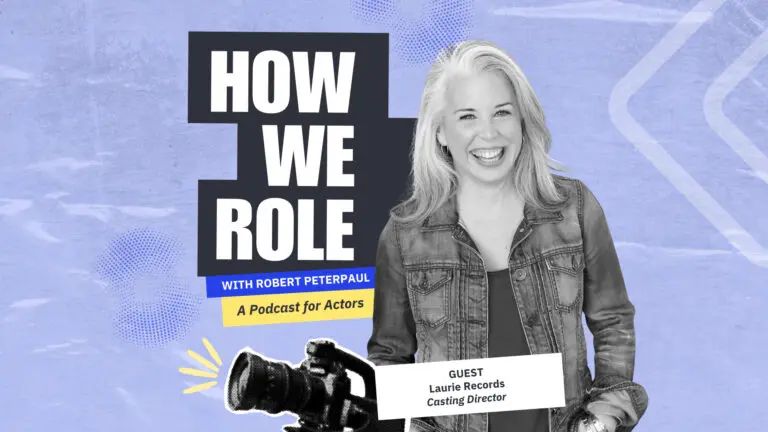

If you’ve been landing commercial auditions but want to get further, this episode is for you.
Commercial casting director Laurie Records joins host Robert Peterpaul to share what earns callbacks, what leads to bookings and what makes casting remember you.
Records has worked in commercials since 2004 and launched Laurie Records Casting in 2009. Her credits include voiceover casting for Barbie and Monster High, and online content for The Muppets and Muppets Now. Before running her own casting company, she worked at Casting Networks, helping actors navigate the transition from hard-copy headshots to online submissions.
From casting profiles and self-tapes to Zoom callbacks, wardrobe and on-set etiquette, Records offers practical advice for actors looking to build their commercial careers.
In this episode, you’ll learn:
- How to highlight your special skills and training to land more auditions
- What commercial casting directors look for in headshots, reels and profiles
- How to identify your commercial type and choose the right roles
- What makes an audition slate and self-tape stand out
- How to prepare for live virtual callbacks
- Why wardrobe choices and social media matter to casting
- What to do when you’re getting callbacks but not booking
Listen to ‘How We Role’ on Apple Podcasts, Spotify or anywhere you stream podcasts.
Make Your Casting Profile Easy to Cast
Records starts with the basics: Know your commercial types and have headshots that reflect each one.
For video submissions, she recommends uploading individual clips rather than a full reel. Commercial casting moves quickly, and casting directors may only watch the first few seconds. Label clips by category, such as comedy, drama or spokesperson work, and skip lengthy title cards so your strongest material appears immediately.
Training and special skills also matter, particularly for commercial roles. Speaking another language, playing a sport or juggling can help you stand out, but simply checking a box on your profile doesn’t tell casting much.
Use the notes section to provide specifics, including how long you’ve practiced a skill, where you’ve trained or how often you perform. The same applies to improv experience.
“I don’t want you just to check a box that says that you can juggle,” Records said. “I want you to say that you’ve been juggling since you were five.”
She also highlights the short statement at the top of a Casting Networks profile as an opportunity to show personality. Rather than listing another credit, consider using that space to give casting a better sense of who you are, especially if comedy is one of your strengths.
For more on building a commercial-ready profile, read Getting Started With Commercial Auditions.
Be Honest About Where You’re Local
Records says commercial casting is becoming more flexible about considering actors who live outside Los Angeles, particularly those who can reliably travel to the city for work.
That doesn’t mean actors should list themselves as local when they aren’t.
Be transparent about where you live and prepared to explain how you’ll get to set. Commercial bookings may require wardrobe fittings several days before filming, so availability involves more than showing up on the shoot date.
Treat Every Slate as a Personality Question
Actors often put too much pressure on getting their slates perfect, according to Records.
Whether you’re answering a question during a live audition or following self-tape instructions, the slate is an opportunity to show casting who you are.
If your voice cracks, a plane flies overhead or something makes you laugh, you don’t necessarily need to start over. Those spontaneous moments can reveal more personality than a perfectly polished response.
Records emphasizes that commercial casting directors want to see real people, not rehearsed versions of what actors think casting wants.
Know Your Commercial Type and Help Casting See It
One of Records’ biggest recommendations for actors pursuing commercial work is simple: Watch commercials.
Pay attention to the people appearing in them. When you notice someone who resembles you in appearance, personality or energy, consider whether that role fits your commercial type.
Your commercial type isn’t necessarily the same as your real-life profession or personality. The people working behind the counter at a fast-food restaurant, for example, may look different from the actors portraying those employees in advertisements.
Records encourages actors to assess where they fit based on their current look and age, then make sure their headshots and other materials reflect those types.
“Tell me how to cast you, help me out.”
Commercial casting has also expanded beyond traditional model types, creating opportunities for a wider range of appearances and personalities. At the same time, actors shouldn’t limit themselves too rigidly.
If a casting director invites you to audition for a role that doesn’t seem like an obvious fit, Records recommends trusting that decision. Casting specifications can change, and the creative team may be considering a different direction.
That doesn’t mean submitting indiscriminately for roles far outside your playing age. When in doubt, ask your agent to check with casting.
Add a Button and Make Your Audition Takes Different
When asked what makes an actor stand out in a commercial self-tape, Records points to the importance of a strong button.
A button is an additional beat or moment an actor brings to the end of an audition. It may never appear in the finished commercial, but it can make the performance memorable enough to earn a callback.
“You will absolutely be remembered by your button.”
Records also recommends making contrasting audition takes genuinely different.
Submitting two strong but nearly identical performances doesn’t show casting much range. Instead, make distinct choices that demonstrate your versatility.
That flexibility becomes especially valuable during callbacks, when directors want to see how well you respond to adjustments. Energy matters, too.
The appropriate energy for a comedic snack commercial won’t necessarily work for a luxury car advertisement. Still, Records wants actors to bring presence and commitment to their performances rather than delivering flat reads.
When an audition calls for something absurd, like pretending to canoe in your living room, embrace it. As Records puts it, the more fun you’re having, the more fun casting is having.
Prepare for Live Virtual Callbacks
Live Zoom callbacks can involve long waits in virtual lobbies, followed by little warning before you’re brought into the audition room. Records says preparation is the best way to avoid getting caught off guard.
Callbacks may happen days or even a week after an initial self-tape. Before logging on, review your sides, casting notes and original instructions. Rewatch any explanatory videos and familiarize yourself with the choices you made in your first audition.
She also recommends recreating some of the practical setup you’d have in an in-person casting session.
Place your script near the camera, even if you’ve memorized your lines, and use a visual marker to maintain your eyeline when needed. The goal is to remove distractions so you can focus on listening, responding and taking direction.
Why Wardrobe Matters at Commercial Callbacks
Records generally recommends wearing the same outfit to your callback that you wore for your initial audition.
One exception is when you couldn’t follow the requested wardrobe instructions the first time. In that case, use the callback to better match what casting originally asked for.
If casting sends specific notes about changing your hair, clothing or overall appearance, take that as an encouraging sign. Records has seen callback notes indicating that a creative team loved an actor’s performance but disliked a wardrobe choice.
Those adjustments can mean the team is interested in seeing whether you fit the final vision for the commercial.
“We’re not trying to torture you. We’re trying to get you a job.”
Do your best to accommodate reasonable requests without stressing over finding the perfect outfit or prop.
Nail the Personality Question Callback
Some commercial callbacks consist almost entirely of answering a question directly to camera. You might be asked about your favorite vacation, what you like to eat or another everyday topic.
According to Records, casting is often more interested in your natural energy and storytelling ability than the answer itself. Testimonial auditions are an exception, since the content of your response may be especially important.
If you’re unsure how long your answer should be, ask. Otherwise, keep it relatively short while giving casting something interesting to work with.
For example, saying your favorite food is a hamburger tells casting very little. Describing a juicy burger fresh off the grill gives you an opportunity to show personality and enthusiasm.
Getting Callbacks but Not Booking? Here’s What to Know
If you’re consistently getting commercial callbacks and being placed on avail but aren’t booking, Records advises against overhauling your audition approach. Being placed on avail means you’re being seriously considered, even if the final booking goes to someone else.
“If you’re getting the callback and if you’re being put on avail, but not booking the job, do not change a thing.”
If you’re getting callbacks but not progressing to avails or receiving positive feedback, she suggests taking a closer look at your callback performances. Consider whether you’re more comfortable auditioning virtually than in person, or whether the transition from a self-tape to a live session affects your performance.
Remember that callbacks aren’t always about delivering the same great take that got you noticed.
Directors also want to know whether they can communicate with you and guide your performance. If a director asks for an unusual adjustment after a strong first take, they may be testing how well you take direction.
Come prepared with different intentions, alternative buttons and other choices you can use when asked to try something new.
What Casting Looks for on Your Social Media
Follower counts generally aren’t a deciding factor in commercial casting unless the production specifically requests them. Your social media presence, on the other hand, may receive attention during the callback process.
Records says members of the creative team often review actors’ social media profiles to identify potential concerns for the brand. Directors may also look for candid photos to share with clients, while wardrobe departments sometimes review profiles for additional visual references.
She recalls a dog food commercial in which an actor had reposted an advertisement for a competing brand years earlier.
Although the old post didn’t represent an actual conflict, it raised concerns during the casting process. The actor’s agent ultimately had him remove it. The takeaway isn’t that actors need to build large followings. It’s that their public profiles can become part of how a commercial team evaluates them.
On-Set Do’s and Don’ts Once You Book
Peterpaul closes the conversation with a quick-fire game about professional etiquette on commercial sets.
Records shares several recommendations for actors once they’ve booked a job:
- Keep bookings confidential. Avoid posting details about the commercial before it airs. A simple “I booked a commercial” is generally enough.
- Communicate emergencies immediately. If something prevents you from making a shoot, contact the producer and your agent as soon as possible. Records recommends emailing, texting and calling when necessary.
- Put your phone away. Keep it on silent during filming, avoid taking set photos and save personal messages for breaks.
- Read the room. Be professional, flexible and easy to work with. Directors remember actors they enjoy collaborating with and may request them for future projects.
- Know when to move on. It’s fine to ask for another take, but if the director says they have what they need, trust them.
Don’t Quit
Records has experienced her own challenges throughout her casting career, including moments when she considered walking away from the industry. Her advice for actors facing rejection, frustration or uncertainty is to lean on their support systems and keep pursuing the work they love.
“If you know deep down you were born for this, don’t quit.”
Hear the full conversation with Laurie Records on ‘How We Role,’ available on Apple Podcasts, Spotify, or anywhere you stream podcasts.
Find more episodes on the How We Role podcast page. This is How We Role. Discover fresh casting calls at castingnetworks.com.