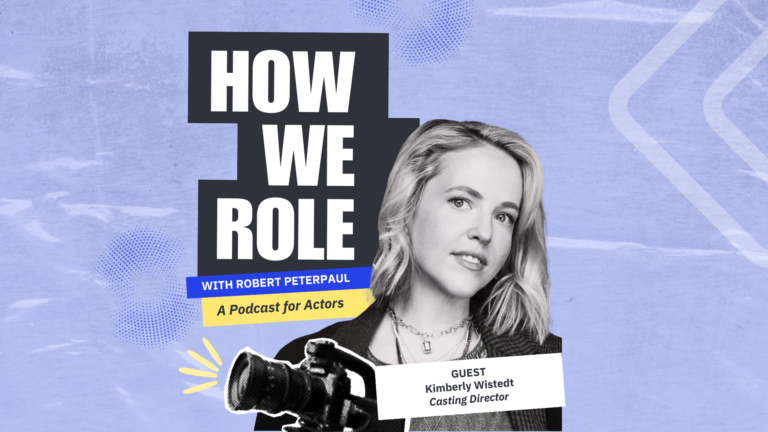

With projects like Send Help, Disney’s live-action Moana, and the Tom Hiddleston-led Tenzing on the horizon, Danny Long Casting is having into one of its biggest years yet.
She spoke to us from her office in Sydney.
Key Insights
- Danny Long believes the best auditions happen when actors stop performing perfection and lean into authentic, truthful choices.
- Self tapes have transformed casting, giving actors more control while still requiring strong instincts, genre awareness, and emotional honesty.
- Successful casting depends on collaboration, empathy, and extensive global searches to discover fresh talent and underrepresented voices.

A lot of casting directors start as actors, and there’s inevitably a moment of clarity when you realize you want to be behind the camera instead of in front of it. Did you have that?
I think I loved it immediately. As soon as I started reading and just playing with actors and having all the joy and none of the stress of it, it was like playing tennis with people. You’re riffing on ideas. I immediately wanted to be a casting director. I just chopped off the acting part of myself, and stopped cold.
Was there anything in particular that made it so special for you, besides the playing with actors?
I just found it really freeing. I think my strongest suit is I have a lot of empathy for actors, so I really enjoy making people feel comfortable in the room, and trying to get the best out of people, and also just making it a really collaborative process. I don’t think I received that so much when I was an actor, so I wanted to break the mold.
A bit less of a power play between the casting director and the actor, and make it a little bit more equal. Auditioning should be an enjoyable process. Joel Edgerton actually said the best thing to me about auditioning. When he used to come in and audition for me, he was just flawless. Casual. Relaxed. I asked him his secret, and he said he just treats every audition like a workshop.
I agree. It should be collaborative. No one can operate from a place of fear. To get the best out of someone, you need to make them feel comfortable. And I really enjoyed that part of the process.
Are you able to do that with the way things have shifted to online and self tapes?
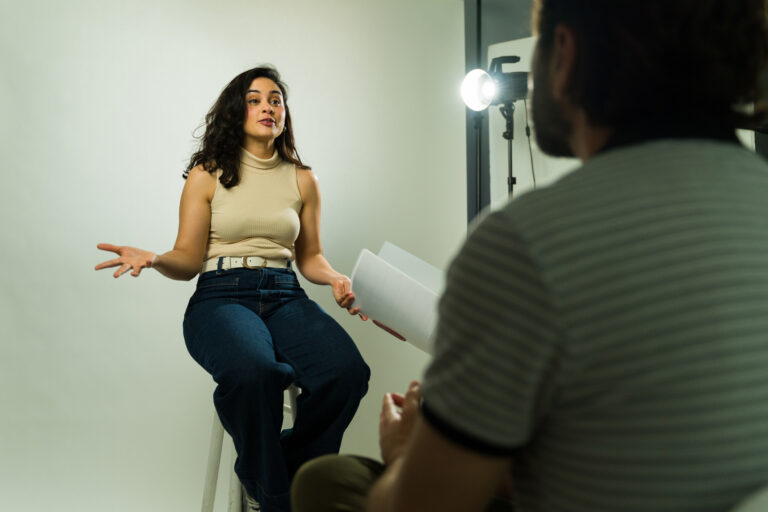
We offer both. Always. Actors often prefer self tapes now because they get to do a gazillion takes and they get all the time in the world to perfect it. I give feedback on self tapes I make people re-tape. If I see a kernel of something in there and I think they’ve just missed it or misinterpreted something, I will say you need to go again with these notes.
I love both. I love being in the room and I love getting self tapes, because you get to see what an actor will organically bring without any interference, instinctually. It’s pretty fascinating, and sometimes when you get self tapes, you’re like, “Oh shit, that’s the way it’s supposed to be.”
I don’t know that I would have got that in the room, but then you have the inverse to happen when they are in the room and you you tweak something, and you know that wouldn’t have been possible with a self tape.
Do you think your background as an actor gives you an advantage?
It’s definitely helpful, for sure. You understand the craft. You’ve been in their shoes. Yeah, you have a better language base to be able to direct from, but you can learn that as well without having been an actor. You could be working with someone for six years, watch them and learn by via osmosis.
I think having been an actor, it’s definitely a bonus.
Working on a studio film like Send Help, do you find your reach as a casting director has extended beyond Australia?
Well, [Dylan O’Brien and Rachel McAdams] were cast by the studio and Nancy Nayor, but the rest of the roles are all mine. But obviously, boots on the ground in the territory that you’re working in is the best way to cast so yes, we all cast globally. We all come up with ideas globally.
I think if you’re actually in that territory, of course, you’re going to have greater knowledge, greater capacity to come up with ideas than somebody who’s on the other side of the world. I do like working collaboratively with another casting director. I find that really useful.
I worked on a film called Tenzing, about Tenzing Norgay, which is all Tibetan and Sherpa speakers. So we did a global search for that during COVID, my associate Ryan Madden and I, auditioning in a foreign language. Casting in communities is my favorite thing. I think people know me for that. Moana was another one where we cast globally in the Pacifica community all around the world.
That was fun. We just did a series last year [where] everyone in it is living with a disability. That was amazing. You get to learn so much about the communities. It’s probably my passion — research and learning about different cultures, and different people with different backgrounds and trying to find the unicorns to be in series that are telling stories that are different [from] the mainstream.
Unicorn finder is a good reputation to have.
I guess so. I think that’s project related, though. I don’t think you can cast unicorns in everything. You often need to attach a name, and in a way that’s tougher when you’ve got a clean slate and you’re finding a Tibetan man to play Tenzing.
How many Tibetan actors do we all know? We probably auditioned over 1,500 people globally for 10 roles in that project. In a way, that’s easier, because when you’re casting attaching names, it’s availability and money, all of that juggle.
It’s a completely different stress to wide searches.
That seems like a good segue into our final question, which is what piece of advice, or wisdom, would you give to somebody coming in to audition for you?
Look, I don’t think I’m going to tell you anything you haven’t heard, but one of my pet things is to make sure you know the genre that you’re taping for. Bring your authentic self to the role. When I say authentic self, I don’t mean the homogenized, shiny version of yourself that you think we want to see.
We want to see the warty, real human aspects. That’s what’s going to set you apart, what makes you you. It doesn’t have to be pretty. Sometimes, it can be left of center, and that’s what makes us sit up and notice your tape or watch you in an audition room where you’re like, “What? What just happened there?”
That’s fresh, but it’s also truthful and authentic.
Looking for auditions in your area?
Browse casting calls in: