
A headshot is often your first audition before you ever step into the room.
Casting directors may scroll through hundreds—or even thousands—of submissions for a single role, and one image can determine whether they click on your profile or keep moving.
So what makes a great headshot? It should feel authentic, look like you on your best day, and capture the qualities that make you uniquely castable without trying too hard to sell them.
YellowBelly Photo, founded in 2018 by best friends Ross McLaren and Jackson Bews, is a portrait photography company specializing in honest, cinematic headshots for actors and creatives. With studios across London, New York City and Los Angeles, YellowBelly has become known for creating natural, authentic portraits that genuinely reflect the person in front of the camera.
Built by actors for actors, the company focuses just as much on the experience of the session as the final image itself, creating relaxed, supportive environments where clients can feel comfortable enough to truly be themselves.
We sat down with YellowBelly to talk about everything from what to wear and how to pose, to overcoming nerves and why it’s imperative to trust the process.
Key Insights
- A great headshot doesn’t create a character—it presents an authentic version of you that helps casting directors immediately understand where you fit.
- The most effective headshots look like you on your best day, not an overly polished version of yourself that won’t match the person who walks into the audition room.
- Feeling nervous during a headshot session is completely normal; the goal isn’t to perform for the camera but to feel comfortable enough to let your personality come through.

What Makes a Great Headshot?
A headshot is so much more than just a good photo of you, and YellowBelly’s aim has never been to create an overly polished or unrealistic version of someone. Headshots should simply look like you on a really good day.
“The job of the photograph is to get you in the room for roles you genuinely have a chance of getting, and then it’s the casting director’s job to imagine you in the part.”
Authenticity is also a key component, and YellowBelly’s vision has always been to create honest, authentic portraits that genuinely capture the person in front of the camera. A headshot should show who you are, not who you think the industry wants you to be.
Why Does Your Headshot Matter So Much in the Casting Process?
“Headshots are one of the most important tools an actor has. They’re often the very first thing a casting director, and sometimes even a director or producer, will see. Instantly, people begin imagining whether they can see you as the character on the page, so first impressions really do matter.”
A headshot that creates a strong impression means connecting to casting with a photo that actually looks like you, and brings something more that makes you stand out among a large number of submissions.
“A strong headshot helps someone immediately connect you to the world of the script and the kinds of roles you genuinely suit. That’s why we always say your headshots should reflect how you actually look day to day.”
If your headshot looks vastly different from you, the disconnect can appear at the audition stage. If you’ve changed significantly, YellowBelly recommends getting them updated at least every two to three years.
What Should You Wear to Your Session?
What you are wearing in your headshot can feel like a permanent choice that affects your castability for the next few years. While you might feel pressure to wear your nicest, fanciest outfit, a common mistake is going out and buying brand-new clothes.
“While you obviously want to look your best, often those aren’t clothes you naturally wear or feel comfortable in day to day. Even if you love the item, you’re not used to moving, sitting or relaxing in it yet, and that can subtly affect how natural you feel in front of the camera.”
Bring lots of options so they can see what colors, textures and tones work best with your skin tone and different backdrops. Avoid busy patterns, and distracting jewelry or logos, but make sure to reflect your personality, as that is how you will show up for an audition. “Ultimately wear clothes that make you feel like yourself.”
How Should You Prepare Your Hair, Makeup, and Grooming for a Headshot Session?
Headshots should ultimately look like you, so your hair and makeup should be prepared in a way that models after your daily look. While using a makeup artist is completely subjective, it’s important to trial your look before your session.
“Generally, we don’t tend to recommend using a makeup artist for headshots, not because they aren’t incredibly talented, but because they naturally won’t do your makeup exactly how you’d normally wear it day to day. In the UK, it’s relatively uncommon, whereas in the States we’ve found around 40% of clients choose to bring one to their session.”
Whether you choose to use one or not, you can restyle and touch up your look at your session, and clean-shaven looks [are best] for versatility. Concerns about temporary blemishes, or tired eyes can be edited during the retouching process. [Avoid] heavier makeup or intense looks, which can compromise the honest, authentic look that YellowBelly does so well.
What Expressions and Poses Work Best?
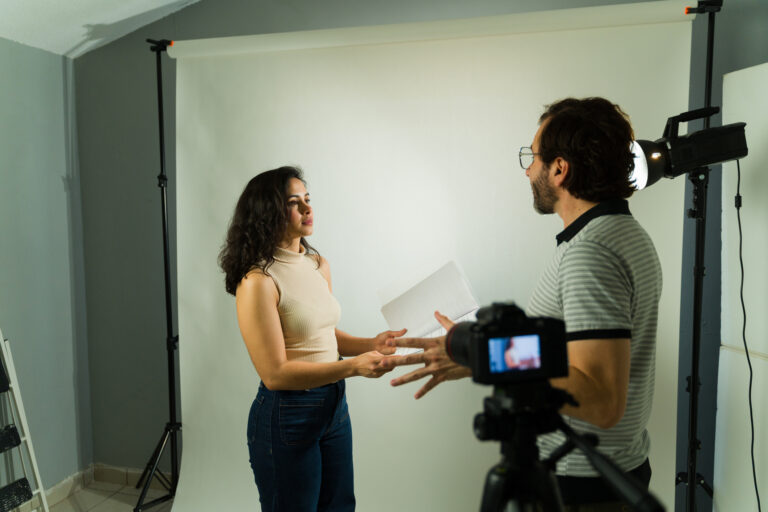
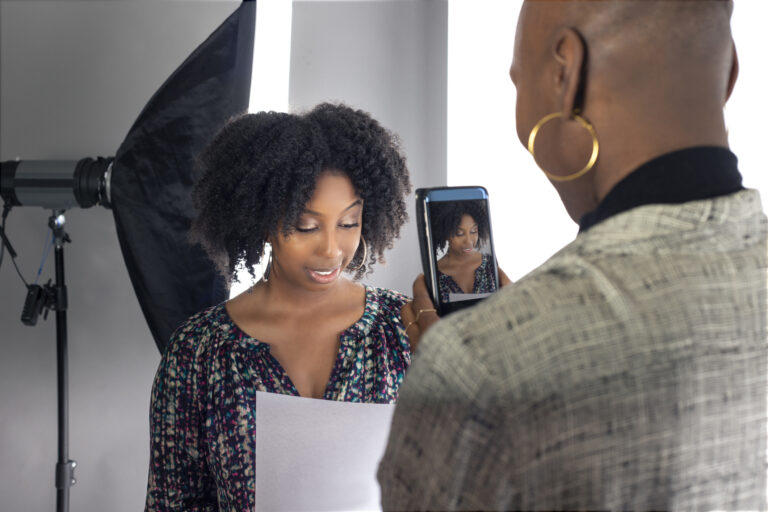
“For us, this process is all about making somebody feel comfortable and relaxed as quickly as possible. Once you’re in the session, the photographer’s job is to put you at ease, whether that’s putting music on, chatting about life, or simply creating an environment that doesn’t feel overly intense or performative.”
While there are specific styles of headshots, it’s important to connect to the camera overall. For a commercial look: warm, approachable with a slight smile. For a theatrical look: direct, serious and emotionally grounded. The best expressions come naturally through conversation, rather than from overthinking style.
“People sometimes connect being uncomfortable in front of the camera with somehow being a bad actor, but the two things really aren’t related at all. Headshots aren’t about performing, and the less somebody feels like they’re performing, the more authentic the photographs become.”
It’s also important to think about what you want out of your session and to express that. “All of our photographers are highly experienced at recognizing what works well on camera, and naturally we’ll always adjust things throughout the session if a client wants to explore a certain look or feeling.”
How Many Headshots Do You Need, and How Often Should You Update Them?
Headshots are an investment, and each time you get headshots done you’ll gain confidence, experience and assurance in what you want or don’t want.
The standard number is typically between 2-4. More can overwhelm, and less doesn’t show enough range. They should be updated at least every 2-3 years, factoring age and any drastic changes, including hair or physical appearance.
The cost of headshots on average is between $200-$500, but they can reach upwards of $1,000 per session, depending on location, photographer and package type.
What Are the Most Common Mistakes to Avoid?
Casting directors want to see an authentic image that represents the person who is going to walk into the audition room. Common mistakes to avoid are headshots that are overly airbrushed or edited strangely by leaving watermarks behind, or by not using the industry standard 8×10.
Avoid clothes that lean too heavily toward character or type, or wearing glasses or using props that not only obstruct your face, but hide your personality. Another major red flag is using group shots, full body shots or selfies instead of a professional headshot photo.
“I think one of the most common misconceptions is that if you feel nervous during a headshot session, it means you’re going to do a “bad” job in your photos, and that really isn’t the case. As long as the images look and feel like you, then you’ve achieved what a good headshot is supposed to do.”
How Do You Upload and Optimize Your Headshots on Casting Platforms?
Selecting the right headshot to use can be an overwhelming experience. Once you get your gallery, you spend an unusual amount of time looking at images of yourself, trying to pick your retouched images and eventually choosing which of these will be your primary headshot.
The selection should look like you and represent the roles you’ll be put up for, while showcasing a range so that you can use the right one for specific castings. The photographer will have a selection if you’ve requested this add-on, and you can make your choices from here. It’s ideal to go through the images at first glance and pick your favorites.
Send this list to your agent/manager and friends and family (especially industry related). Note any overlap between selections, and try to avoid choosing photos that are too simple, or ones that just “look nice.” Try not to spend long agonizing over the choices: you can always select more to be retouched later.
When the time comes to upload your selections to casting platforms, make sure to use the correct file format and resolution. Most sites use JPEG images, under 2MB at around 2000×1500 pixels. If you’re unsure, you can ask your photographer for copies in the correct format.
What Should You Look for When Choosing a Photographer?
Choose a photographer whose work you connect to. Do your research, peruse their portfolio, ask friends about their experience and if they’re happy with the outcome. For actors of color, you want to identify whether they’ve worked with a client who has a similar skin tone to you, see what light they use and what color backdrops they work with.
What sets YellowBelly apart (and makes the choice that much easier) is their collaborative and supportive approach. They get inundated with emails from actors with concerns about being “bad at headshots,” and they understand that there’s a vulnerable quality to having your headshots taken.
“That’s why such a huge part of our job is simply making people feel comfortable. Every photographer works differently, but the thing we pride ourselves on most is creating sessions that feel relaxed, calm, and genuinely enjoyable.”
You can find out more about YellowBelly Photography here: https://www.yellowbellyphoto.com/