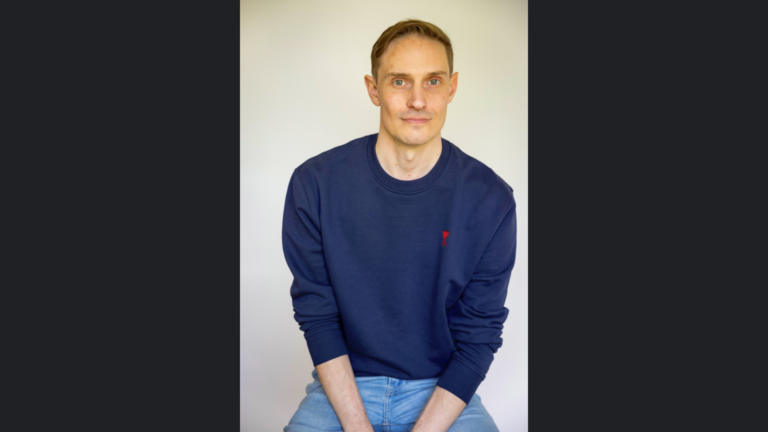

A casting director since he was just 20 years old, Anthony J. Kraus has worked with some of the best in the business.
Over the last few years, he’s become partners with legendary pro Jill Anthony Thomas, and together the two have worked on hit shows like Loot, Unbelievable and A.P. Bio, just to name a few.
Kraus has also shared Artios nominations with Thomas, winning once for the short-form series Mapleworth Murders.
Kraus spoke to us from his home office in Sherman Oaks.
Key Insights
- Research the project’s creative team and tone before your audition so you can deliver a performance that aligns with the role.
- Strong auditions begin long before you enter the room, with thoughtful preparation and a clear understanding of the material.
- Building a successful career in entertainment often comes from learning under experienced mentors, staying collaborative, and consistently honing your craft.

How did you get into casting?
I came to LA for film school when I was 19 from small-town Nebraska. I didn’t really know what I wanted to do, just that I wanted to live in New York or LA. I went to the LA Film School, which was a one-year program at the time. They literally give you all the tools. The first week they say, “Go make a short film.”
I figured out that when I graduated, no one’s going to hire me to be a producer or a director, but one of the last classes for directing was working with actors, and it was taught by a casting director. I thought, “Wait, why don’t we have classes on that?” Working with the actors was the first thing that I liked, so every day after class, I would just ask her about what her job was.
Then, through a friend of a friend, I got an internship in Roger Mussenden’s casting office, and then they hired me.
It’s interesting that the class about directing actors was taught by a casting director and not, y’know, an actual director.
I’ve soaked up a lot from directors and casting directors over the years, but I oftentimes find that the casting directors I’ve worked for are so good at giving notes to actors, and it’s so different than what I see on set.
I don’t know what the perfect version of that is, but it feels like it should be a skill taught in acting school like, “Hey, this is how you get jobs.”
Okay, but you went down the road of casting before you had that experience, so what was it about casting that really spoke to you?
In film school, we were all each other’s actors. We were just casting whoever would say yes. But once I got out, it became about the idea that we’re putting together a puzzle. That’s what drew me in, and made me want to learn how to hone that skill. I hear a lot of people tell stories about growing up watching things, and having favorite actors, but while I loved movies and TV when I was a kid, it was just never something that I had thought about.
So this realization was a thunderbolt of, “Oh, this is a job. This is a skill. And there are people doing it.” That was just so fascinating to me.
So, you come out of school and you’re working for Roger. You’re, what, 20 years old? You’re thrust into this brand-new world, and what I imagine was pretty amazing on-the-job training.
It was amazing. At the time, Roger was doing Adam Sandler movies and a bunch of Universal stuff, so his office was teaching me everything that I know. Melissa Kostenbauder was his assistant.
You’re now the second person I’ve talked to recently who worked with her back in the day. Everyone loves her.
We were all so thrilled when she won the Emmy for The Studio. I was texting her that night.
It’s great that everyone is still friends after so long.
It was a super busy office, and we were working on cool stuff. I got very lucky. I was basically her assistant, and it was back when you were going through headshots and physically updating people’s files. I was just trying to be a sponge. Roger then introduced me to to Seth Yanklewitz.
I worked for him and Juel Bestrop for a minute, then David Rapaport. The first TV pilot I ever worked on was Gossip Girl. It was a time where there was so much happening, and I got to work on lots of cool stuff right out of the gate.
Do research into who you want to work for and what that experience might be.
That’s what brought me to my partner now, Jill Anthony Thomas. We knew each other when I worked at NBC. When I left and was looking to get back into independent casting, she was one of the offices doing comedy.
Through a friend at NBC, I asked if she was hiring. We ended up on a pilot together.
You’ve worked with her for a while. When did you graduate to sharing credits with her?
We did a pilot for the Disney Channel called The Villains of Valley View, but even as an associate, I was always treated much more like an equal.
She is really good at fostering talent and pushing for you to be involved. No idea is a bad idea. It’s just such a very collaborative office and creative space. After that show, we started sharing more and more stuff.
What do you think makes you such good partners?
We’re very similar. That doesn’t always work for a partnership, but we have similar family backgrounds, we’re both from the Midwest, we have similar working styles. We just really connected on that personal level, so it made working together very fun. She’s had partners before, but I think part of it also is the generational divide.
I think she sees me as the next generation. She likes to say, “I just need to stick it out for five more years, and then I’m retiring. You’re taking over the business.” Not a lot of casting directors think about that. So many people I know are going to work until they die, and she does not want to do that.
She’s made that clear. She wants to be able to go have a life, and she’s told me, “You can take on everything when I go.” I’m just super thankful that she sees me that way.
Do you allow yourself to take credit when you do a job well? Or do you brush it off and say, “On to the next”?
I think there’s a certain amount of always thinking, “Is this going to be our last job? Is no one else going to call? Is this show going to get canceled?” There’s a certain amount of that [with] every casting director I’ve ever worked with or for, and in the last couple of years, especially where there’s been lulls and breaks and strikes, it’s only been a little more amplified.
So I think what Jill and I have tried to do, and me specifically, is really relish in finishing something and being proud of it. This is just one of the best jobs, and I think I’ve gotten much more cognizant of this over the last five years.
But to answer your question, as we wrap something up, we usually do a celebratory dinner or something, a cheers to us for another job.
What piece of advice, or wisdom would you give to someone coming in to audition for you?
There are so many do’s and don’ts, but I think the one piece for me that’s important is the same as we were talking about before: be prepared and know the history. The easiest thing for an actor to do is to see who’s involved and know the tone.
It’s all of that pre-work before walking into the room, so that once you get in there, you know that you’re prepared, and that you have come with the best version of yourself.