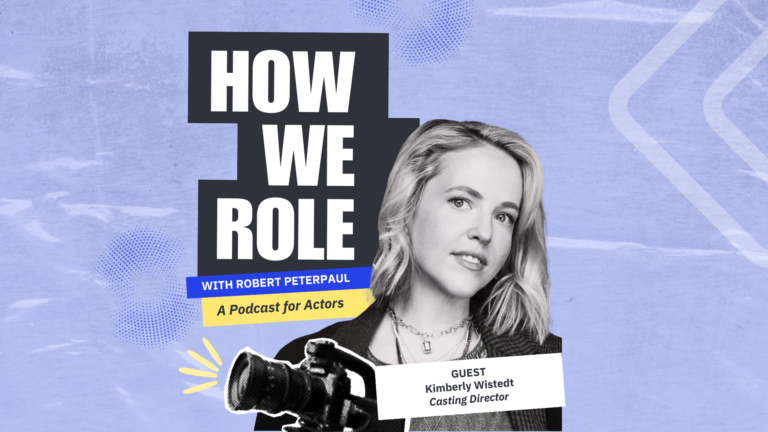

The Atlanta-based casting director behind ‘Outer Banks,’ ‘The Hunting Wives,’ and ‘His & Hers’ joined How We Role to demystify one of the most misunderstood terms in the industry: local hire.
Kimberly Wistedt sat down with host Robert Peterpaul to unpack what it actually means, and why misrepresenting your situation on a slate can cost you more than the job.
In this episode, you’ll learn:
- What “local hire” really means, down to the 60-mile radius and the paperwork behind it
- Why claiming local status you can’t back up can backfire on you financially and professionally
- How to figure out which market is actually right for you before you make the leap
- Real examples of local hires who grew into series regulars
- What separates a one-off booking from an actor casting keeps calling back
- Her take on slate shots, self-tape clips and what actually earns a second look
- Quick-fire advice on pitches, follow-ups, script analysis and more

The Golden Ticket, With Fine Print
Wistedt has spent the bulk of her career casting in the Southeast, where tax incentives turned Atlanta, Charleston, Nashville, Wilmington and New Orleans into major production hubs. Being local, she explained, has real financial weight behind it for productions. But actors don’t always understand what they’re promising when they slate themselves as one.
“You live within a 60-mile radius from the producer’s base. That means no hotel, no per diem, no travel, no ground transportation.”
She walked through what happens when an actor claims local status they can’t actually support, and why it puts everyone, including the actor, in a difficult position.
When Saying You’re Local Can Backfire
Wistedt was candid about the pressure actors put on themselves to say yes to a local hire situation, even when it isn’t financially realistic. Her advice centers on honesty with casting from the start.
“We never want actors to slate, ‘I can be local,’ knowing that it’s deeply hurting you financially.”
She also shared how honest communication with reps and casting, rather than stretching the truth, tends to work out better for everyone involved on both ends of the process.
Finding the Market That’s Right for You
For actors considering a move, Wistedt broke down how she’d approach researching a new market, from checking the trades to figuring out where a person could genuinely feel supported, not just employed.
“I think success is a really multifaceted word.”
She pointed to specific resources for tracking what’s filming where, and explained why finding a community of local actors often matters just as much as finding the work itself.
From One-Line Bellhop to Series Regular
Wistedt shared several examples from ‘Outer Banks,’ ‘His & Hers’ and ‘The Hunting Wives’ of local hires whose small roles grew into something much bigger over time, including how the ‘Outer Banks’ ensemble came together during its very first season.
“We had no idea it would be such a huge hit when we were first casting the pilot.”
What Separates a One-Timer From a Repeat Booking
Casting directors remember actors, for better or worse. Wistedt talked about what she’s noticed in the actors who keep getting called back versus those who book once and disappear from her radar.
“If you’re being seen, you’re gonna be remembered.”
Peach Tea: A Casting Keywords Speed Round
The conversation wrapped with a rapid-fire round covering resumes, audition nerves, callbacks, pitches, follow-up emails and script analysis. A few highlights, without giving away the full round:
- Resumes: keep them organized
- Pitches: make them project and role specific
- Script analysis: chase the tone before the words
Listen to How We Role on Apple Podcasts, Spotify, YouTube or anywhere you stream podcasts.
Ready to find your next role with Casting Networks? Sign up for a free trial today!