
The new HBO comedy series Rooster centers on Steve Carell as Greg Russo, a divorced fiction author from Florida who visits an East Coast college campus where his adult daughter, Katie, is a professor whose husband has just left her for a graduate student. Greg ends up staying on as the school’s writer-in-residence, becoming deeply enmeshed not only in campus life but in his daughter’s personal upheaval.
Key Insights
- Steve Carell was drawn to Rooster as much for its emotional exploration of fatherhood as for the opportunity to collaborate with showrunners Bill Lawrence and Matt Tarses.
- The cast emphasized the show’s deeply collaborative environment, with actors actively shaping character dynamics through rehearsal and discussion.
- Showrunners blended longtime collaborators with emerging talent to quickly build ensemble chemistry in a shorter streaming format.

At a press conference attended by Casting Networks, Rooster showrunners Bill Lawrence and Matt Tarses, known for series including Scrubs and Bad Monkey, said the show grew out of a shared experience: reaching the stage of parenting where a daughter becomes an adult, and may not always want her father as involved in her life as he once was.
In the meantime, the father insists on inserting himself in her life anyway.
Ultimately, Lawrence said, it’s about realizing “that trying to be in their life is not really for them. It’s for you.”
Carell was drawn to that exploration, especially as the father of a daughter himself. But he was equally motivated by the chance to work with Lawrence and Tarses. Lawrence created hits like Ted Lasso and Shrinking, while Tarses’ credits include Mad About You and Sports Night.
“When they called me, I thought, ‘This could be something really special,’” Carell said. “A partnership with people that you admire. That’s what I’m most intrigued by. And working with great actors.”
That collaboration quickly proved rewarding.
“It felt like a true ensemble,” Carell said of a cast that includes Charly Clive as Katie, Phil Dunster as her unfaithful husband Archie, and Lauren Tsai as the graduate student. Danielle Deadwyler plays a poetry professor who may become a love interest for Greg, while John C. McGinley appears as the college president.
“There was such a pervasive kindness and generosity that reminded me of my experience on The Office in terms of it was a cast where no component was more important than any other.”
For Clive, a British actress known for the series The Lazarus Project, the opportunity arrived in her inbox under the subject line “Untitled Steve Carell Project.”
Her audition included two scenes from the pilot: Katie’s first tense interaction with her father on campus, and an emotionally charged confrontation with Archie about his affair.
Before she recorded the tape, however, her agent tempered expectations, warning her she likely wouldn’t land the role because it was “this big American thing.”
“The stakes were very low because I was like, ‘No one’s going to watch this tape,’” Clive said. “So I had loads of fun with it.”
That looseness ultimately worked in her favor. Her performance led to a meeting with Lawrence, Tarses and Carell, and ultimately to her landing the role.
Casting Archie, Katie’s husband, required a delicate balance. The character serves as an antagonist, but still needs to retain enough humanity for viewers to empathize with him.
“That skill set is rare, and Phil has it,” Lawrence said.
Dunster, who previously worked with Lawrence on Ted Lasso, said the complexity was part of the appeal.
“It would be very boring if he were a nincompoop and you hated him,” Dunster said. “It gives you much further to go [as an actor] and is so much more inviting as an audience to ask, ‘Why is he like that? Why do I feel a tug on my heartstrings?’”
The writers clearly succeeded in that balance. Tarses joked that, despite Archie’s behavior, even he finds himself sympathizing with the character.
“I don’t want to spoil anything,” he said, “but not great things happen to him, and I found myself feeling really bad for this despicable guy.”
Deadwyler, meanwhile, relished the chance to step into lighter territory. After delivering acclaimed dramatic performances in films such as Till and The Piano Lesson, she said the project offered a welcome shift in tone.
“I knew that I needed to rejuvenate my nervous system after years of drudgery and tears,” she said.
Before filming began, Deadwyler and Carell met to workshop several scenes and explore the dynamic, romantic and otherwise, between their characters. Among them were a bar scene from the pilot and another pivotal moment for her character, poetry professor Dylan Shepherd.
“It was really, really fun,” Deadwyler said. “I was like, man, I love this guy.”
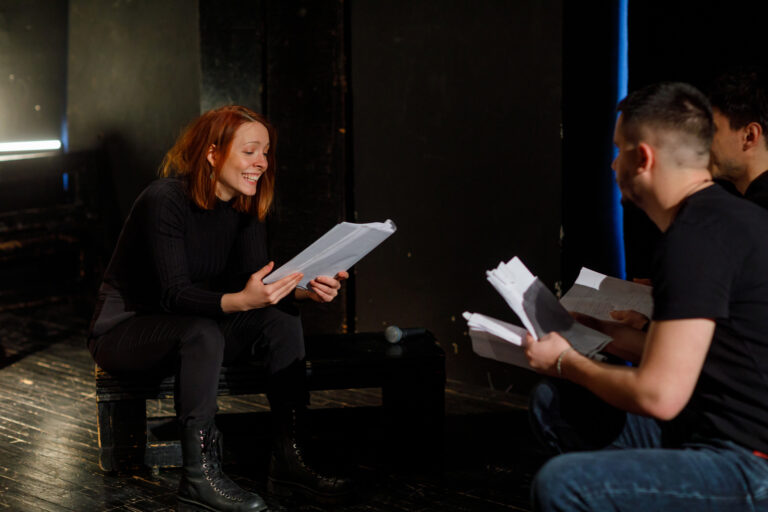
The process felt deeply collaborative, she added. It was less like a traditional television rehearsal and more like a theater workshop.
“You’re having a dialogue with folks who want your input, who are trying to craft with you,” she said. “Everything about this was hyper-collaborative, and that’s the kind of joyful project you want to be on.”
Lawrence and Tarses also revealed that Carell’s Greg Russo was partly inspired by real-life author Carl Hiaasen, whose novel Bad Monkey the duo previously adapted for Apple TV+.
Another character came from a more personal and humorous source.
John C. McGinley’s Walter Mann, the health-obsessed and slightly overbearing president of the college, was modeled largely on McGinley himself.
According to the showrunners, visiting the actor’s home involves a mandatory sauna session he built himself, complete with a list of strict rules posted inside.
“He sits you in there and talks about what’s concerning him with the world, where he’s at emotionally, how his kids are doing,” Lawrence recalled.
And just when guests think the experience is over, it escalates.
“When you think it’s done, he puts you in a cold plunge,” Lawrence said. “He looms over you and won’t let you get out. He goes, ‘Your body’s responding positively because it feels like you’re dying.’”
The anecdote convinced the writers to borrow from real life.
“We decided to steal his life and put that in the show,” Lawrence said.
McGinley confirmed the inspiration.
“He told me, ‘Johnny C., I want to steal your life,’” the actor said. “A lot of times, actors craft characters with eccentricities and tics we can hide behind. In this case, it’s Walt Mann playing John McGinley. So yes, I’m intimately familiar with Walter Mann.”
McGinley, who is also collaborating with Lawrence on the current Scrubs reboot, first met the showrunner when auditioning for the original series more than two decades ago.
“Billy and I met in January of 2001 when I auditioned five times for the role of Dr. Cox,” McGinley said. “Even though the script said ‘a John McGinley type,’ Bill still made me audition five times.”
“You weren’t as comfortable playing a John McGinley type back then,” Lawrence joked.
Lawrence acknowledged he enjoys working with collaborators he knows well, partly because that shared shorthand can speed up the creative process. In addition to McGinley and Dunster, Rooster features guest and supporting roles from previous collaborators, including Connie Britton, Alan Ruck and Rory Scovel, who worked with Lawrence on Spin City.
But the showrunner stressed that returning collaborators are only one part of the equation.
“If you’re lucky enough to get to make something, and there are incredibly talented people whose voices you know in your head, and who you want to spend time with in real life, you’d be insane not to work with them again,” he said.
At the same time, pairing those familiar collaborators with new talent is equally important.
Clive and Tsai represent a newer generation of performers who help give the show its energy, balancing seasoned actors and long-time collaborators with fresh voices.
That blend also serves a practical purpose in today’s television landscape. Before streaming changed the industry, network shows had 26 episodes a year, and it could take 10 to 15 episodes for actors to begin gelling or audiences to begin connecting to them. Now, streaming shows often have only eight to 10 episodes, shortening that process considerably.
“If you don’t do that in two or three episodes, and have layered characters that everybody’s interested in, [audiences] just drift to another show.”
For Rooster, the mix of actors they’d worked with before, performers they’d long wanted to collaborate with, and emerging talent able to hold their own alongside veterans, proved key.
That balance, Lawrence said, allows the show to walk what he calls a “tonal tightrope.”
“To switch from broad, silly comedy to moments of emotional depth and pathos, you have to find actors who can pull that off,” he said. “Otherwise the show’s a disaster.”
Fortunately, he added, every member of the ensemble is “skilled enough to make that sharp turn.”
Key Takeaways
- Rooster stands out as a character-driven comedy built on strong creative collaboration between cast and creators.
- The series balances humor and emotional depth through performances designed to humanize even its most flawed characters.
- Real-life inspirations and actor input play a key role in shaping the show’s tone, relationships, and authenticity.