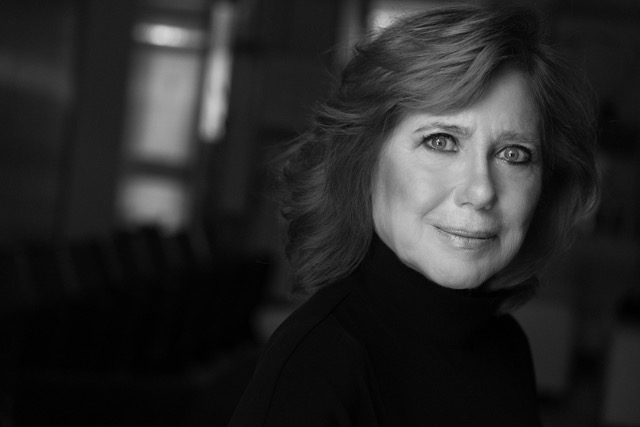

Casting director Allison Jones moves easily between comedy, drama and genre filmmaking. A two-time Emmy winner (Veep) and three-time Emmy nominee (Curb Your Enthusiasm), Jones’ work in the past few years includes Barbie, Don’t Worry Darling, the current box-office hit, The Housemaid, and last summer’s horror film, Weapons.
Written and directed by comedian-turned-filmmaker Zach Cregger, Weapons stars Julia Garner as Justine, an elementary school teacher whose class mysteriously vanishes overnight, except for one surviving child. The story unfolds through multiple perspectives, including a grieving father (Josh Brolin), a police officer (Alden Ehrenreich), a homeless addict, and the lone surviving boy, who lives with his unsettling aunt Gladys (Amy Madigan).
Jones spoke with Casting Networks about building a believable small-town ensemble, navigating major recasting setbacks, and why the Academy’s new Casting Oscar is long overdue.
Key Insights
• Allison Jones prioritized authenticity over fame, focusing on actors who could convincingly embody ordinary small-town people rather than recognizable stars.
• COVID shutdowns and industry strikes forced extensive recasting, reshaping the ensemble and delaying key casting decisions for years.
• Casting the film’s children, especially the role of Alex, required patience and restraint, favoring natural presence over over-coached performances.

When you first came on board, what kind of casting requirements did Zach Cregger lay out for Weapons?
The requirement for the whole cast was to have believable small-town people. There are some amazing women who were interested in playing Justine, but we just couldn’t buy them as a small-town schoolteacher. Zach didn’t want anybody too famous, especially for the Gladys role, because that would have taken you out of the movie.
We were interested in looking at European actresses who were not well-known over here in the U.S., and he wasn’t looking for anything comical, punch line-y, or goofy. He worried that more comedic types of people in that role could make the performance schtick-y.
Weapons had a disrupted pre-production history. How did COVID and the strikes impact casting decisions?
Weapons was one of those projects that was impacted by the COVID shutdown, and then the SAG and WGA strikes. Lots of stops and starts. For instance, Pedro Pascal was initially playing the role of Archer, the father of one of the missing children. Pedro was with us until the strike. Then his Marvel commitments came up. We had to recast almost everybody.
Amy Madigan is a Critics’ Choice winner and a Golden Globe nominee for her role as Aunt Gladys. When did she first enter the conversation?
Zach met with Amy early on, and nobody made a decision. Then we lost Pedro when the strikes happened, so we had to concentrate on recasting his role and the role of Justine, because we had someone set for her as well.
Casting and scheduling this film after COVID and the strikes was a nightmare. But Amy was always a top choice for everybody.
Gladys is hard to define on paper, but Zach had a clear vision. How did you describe her to agents and managers?
When I described her to agents, depending on their ages, I would either say she was like Baby Jane Hudson meets Sweeney Todd, or a female Hannibal Lecter. I think I also said a female Voldemort.
That character is the beating black heart of this movie, and you have to buy her, or it doesn’t work. I don’t know how Amy did it, but she created such an evil demon, and still had a sweet face. And the way she speaks. She’s such a brilliant actress.
You also had to recast Justine. What qualities were you and Zach most focused on for that role?
Zach is big on throwing out names and talking about them. He would say, “Do you think this actress could really be a teacher?” “Do you think she can do that drunk scene?”
That scene at the bar with Alden Ehrenreich and Julia Garner getting drunk was a big, pivotal scene and important to get right, and Justine getting drunk at home and revealing all her insecurities. We talked about many actresses.
That’s why I like to meet actors on generals, because what you bring out of them is what’s inside them, pretty much.
The role of Alex, the surviving child, anchors the film. How long did that casting process take?
It was a tough role to cast and took a few years because the first kid we cast got too old [by the time shooting came around]. We got lots of self tapes and had lots of auditions. The role was open to a girl or a boy at the time.
One little girl was spectacular, but it was decided a little boy would’ve been more believable getting picked on the way he was being picked on. We did a lot of LA casting in person, Atlanta casting in person, and New York casting on tape.
When we found Cary Christopher, he was smaller than Zach had pictured for the part, but he was very mature, and he knew what he was doing, and he wasn’t “acting.”
That can often be the problem with kids. They’re over-coached by their parents. But Cary was more of an observer kind of a kid, which was perfect for Alex.
Since the children in the film are largely Alex’s classmates and often seen together onscreen, did Zach give you any specific direction on how they should be cast as a group?
Zach had instructions for how they do “the run,” and he wanted to audition them doing that “run” [running fast, but stiff, with arms outstretched in a downward “V”]. And for the candidates for Alex’s mom, there was a movement person who worked with the auditioning actresses so they would notlook like a zombie, but still remain dead-eyed.
Not a Stepford mom, but also not a Walking Dead mom. It was really important to Zach, and he wanted to work with the actors on that.
Callie Schuttera, who has worked on shows like The Rookie and On Call, ultimately played Alex’s mother. What do you remember about her audition?
She was a really good actress and very low-key. She didn’t look like the greatest mom in the world, but she did look like a nice mom. She wasn’t a TV mom, with all due respect to how many TV moms I’ve had to cast.
She was an interesting, offbeat character who paired well with Whitmer Thomas, who was cast as Alex’s dad. They were kind of a cool couple, but still small-town. I didn’t know her at all before she self taped. But that’s the benefit of self taping: you meet more people that way than you would ever meet otherwise.
This is your first time working for Zach as a director. Did you work with him before in other contexts?
I brought him in as an actor a million times. He’s a comedy guy, and I knew him and all the guys from The Whitest Kids U’Know [the sketch comedy troupe he was a part of].
He’s a very open, friendly guy. I knew he’d done a Sasquatch documentary series, which was fascinating. But then he directed [the horror film] Barbarian, and I wasn’t aware of that. When I saw it, I was like, “This is Zach Cregger? Wow!”
Weapons is the first horror film you’ve cast. How did this genre differ from your usual work?
We had to let actors know that they were going to get killed in a bloody, disgusting way! I don’t usually run into that with the projects I do. But this movie wasn’t really a horror movie for the first half hour. It was like a regular movie.
You knew something strange had happened in the town, but it didn’t turn into a bloody thing until poor Benedict Wong [became a victim of Aunt Gladys].
When you audition actors, do you have any pet peeves?
Don’t chew gum or have too many props. Even if it says so in the script, don’t eat anything or chew gum. It gets in the way of your audition.
Self tapes became standard during COVID. Where do they stand now?
Self taping is now a pre-reading level for most actors, because we are getting back into having producer sessions. I wish actors would know that putting themselves on tape is really helpful, because with a good casting director, when we see something, we pursue it no matter what.
We’ll have the actor re-tape, or we’ll have them come in. For me, I go by the essence of the person, and almost don’t even hear the dialogue because line readings in an audition are almost meaningless.
This year marks the first-ever Academy Award for Casting. Nominations are determined via “bake-off,” where voters view short reels of the work in contention, which includes Weapons. What does this new Oscar category mean to you and your peers?
Finally! It’s amazing. We’re obviously very pleased about it, and it’s about time. We all had to put together these little short films [for the bake-off], and it was like, “My God, every single one of these movies is so well cast!”
Key Takeaways
• Believable casting hinges on essence and truth, not celebrity, especially in grounded genre storytelling.
• Flexibility and persistence are essential for casting directors navigating production disruptions and shifting schedules.
• The Academy’s new Casting Oscar marks long-overdue recognition of casting as a foundational creative force in filmmaking.