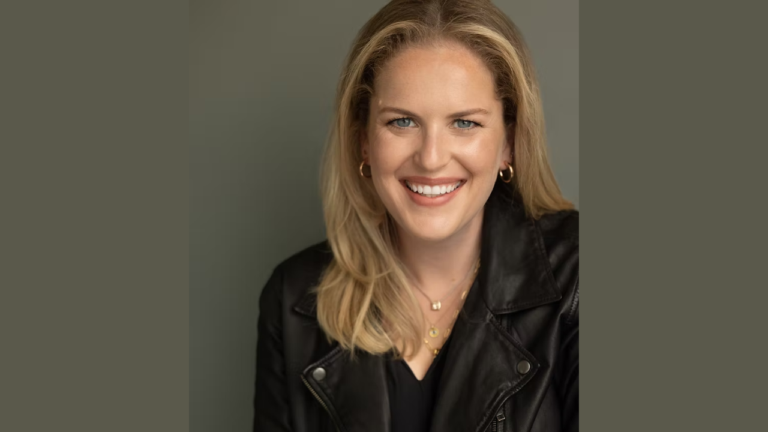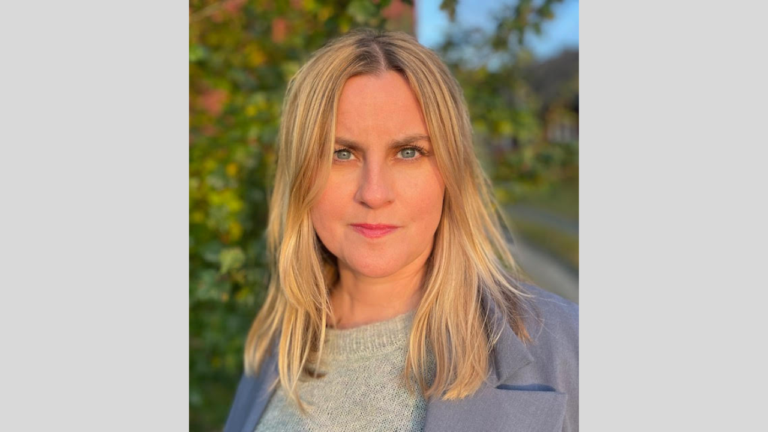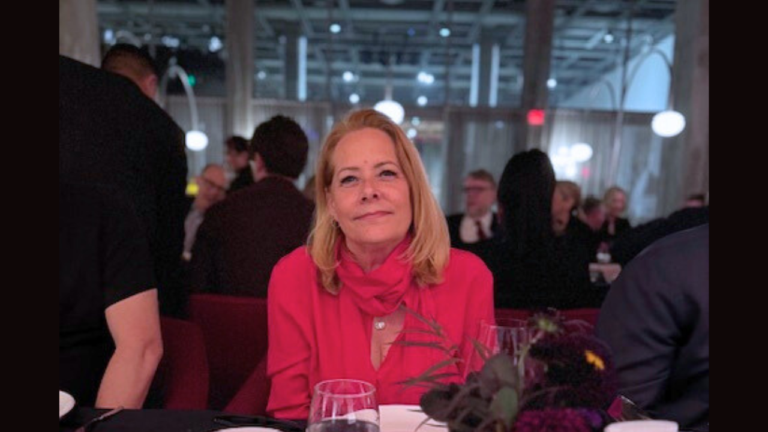

There is an increasing number of productions being shot in South Africa, though the industry there is still quite small. Since there aren’t many actors or casting directors, the good ones really stand out. Bonnie Lee Bouman is one of the good ones.
An experienced and versatile casting director, she doesn’t just work on productions shooting locally, she’s branched out to work on international stuff as well. Her credits include the Jack Quaid dark comedy Novocaine, the Dave Bautista sequel My Spy: The Eternal City, the Idris Elba vehicle Beast, the hit horror flick Escape Room, and the historical epic TV series Warrior, among dozens of others.
Her latest is the Aaron Eckhart vehicle Muzzle: City of Wolves, which will be released on VOD soon. She spoke to us from her home office in Johannesburg.
Key Insights
- South Africa’s smaller talent pool pushes actors and casting directors to be versatile across mediums, languages, and accents.
- Bouman has helped shift long-standing industry biases by actively advocating for South African performers in international projects.
- Street casting, community outreach, and hands-on workshops are essential to authentically casting local and pan-African stories.

How did you first get into casting?
Well, I was born in Canada. My parents were quite nomadic, so when we came back to South Africa, my mother used to write plays, and of course, great nepotism. I was always starring in all of them, except if it was a singing part, then she had to voice-over me, because I had a terrible voice. So I started acting at a really young age, and then I got into modeling, and eventually went into corporate and spent 10 years there.
I found myself thinking, “This can’t be my life.” I think I got a bonus of 85,000 rand, or a trip to Dubai, and I said to myself, “Are you really going to go buy a washing machine or a dryer and domesticate yourself further?” So I chose to to go back to Vancouver and spent a year at Vancouver Film School, and then I came back to South Africa, and just wanted to teach.
This was 1998. My word. (Laughs) But then my model agents had bought a casting company, and they said, “Don’t you want to be a casting director?” I thought, “Yeah, I can do that.” And I’ve never looked back.
What was it about you that made the the modeling agent suggest that you should be a casting director? Because not everyone’s built for that.
I think it’s because I was going around to all the casting directors and saying, “I want to teach classes, so if there’s anyone that you need to improve on, let me know.” My boss found out and said, “You’re really good at this, so why don’t you be a casting director here?”
It was that simple? You never really worked for anyone else?
When I was in Vancouver, I worked for Randy Lind. She’s a well known voice-over casting director. I was her assistant for about 18 months or maybe two years, so I had an understanding of the process. And then, of course, in South Africa, it’s very different.
We have a very small pool of actors, maybe 4,000 between Cape Town and Johannesburg, and because we’re such a small pond, people are versed in all the different mediums. That’s the only way you get by. I knew I would survive.
I’m curious about working in South Africa. Johannesburg and Cape Town are now shooting destinations in a way that they weren’t probably even 10 years ago. How much has your job changed over the course of your career?
Cape Town was always a destination. In October, November, December, January, February, all the international models will come out, they would shoot all the international commercials, and so forth. We, as a country developed a rebate, as most countries in the world have, and when I entered the film industry, there were some seriously big productions being shot here.
Really, really big ones. But they were flying in a lot of their international cast because of accents. There was a casting director who said, “No one in South Africa can do an American accent,” but come on, that’s horseradish. (Laughs) We have a pool of actors who can do a variety of different accents — Irish, French, American, British, and actually can speak different languages as well. We also have some of the best crew in the world.
The South African work ethic is something I’ve never experienced elsewhere, and I’ve traveled quite a bit. I started advocating for local talent for the films that came here, because I knew that they could do it. So all I needed to do was prove it.
And how did you do that?
I was feisty. I would ask, “Could this character be a woman? Can we do this? Can we do that?” I think by perseverance, and also showing people that these actors could do it, we’ve been placing more and more South Africans into these roles, playing people from different countries. It’s a cost factor, yes, but it’s also an accolade to the talent that we have here. I was pretty pushy. I think I still am. (Laughs)
I have noticed that the number of productions happening in South Africa is far more than it used to be. Why do you think?
Well, I think people talk, number one. There’s been a lot of repeat producers who’ve had an incredible time and who speak very highly of South Africa to their colleagues. We have fantastic crews and we do a kick ass job, excuse my language.
(Laughs) It speaks volumes, because the industry is small, and for those willing to come, Cape Town is a premier shooting destination. It really is. Johannesburg, where I currently live right now, is more of a local TV spot, but I think that they keep coming back because they hear all the good stories.
Taking the current political situation into account, do you think it’ll continue?
If you’re making a low-budget film, a lot of independent producers come out here. We make some great films. One Piece is shot in Cape Town, they don’t even need the rebate. But I think everybody is really nervous. What I have seen is an upswing in local content.
So I’m doing three TV series in a row for Netflix, back to back, in October, November, December, January, February. So that’s the sustainability. We can only hope it’s not going to stop.
It sounds like, while the world falls apart, you seem to be doing okay.
I think everything passes, or it pivots. It can’t stay the same, it cannot stay stagnant. Me feeling depressed over the film industry does not help me, it doesn’t help the people I interact with.
When we were talking online before this conversation, you mentioned how different casting is there than here. Can you explain the difference?
There was a project that came here, and it was going to be set in in Somalia. Everyone, except for the number one, was Somalian. We have a very small group of Somalians, a lot of asylum seekers, so I got myself connected with a guy and said, “Can you help me with the Somali community?”
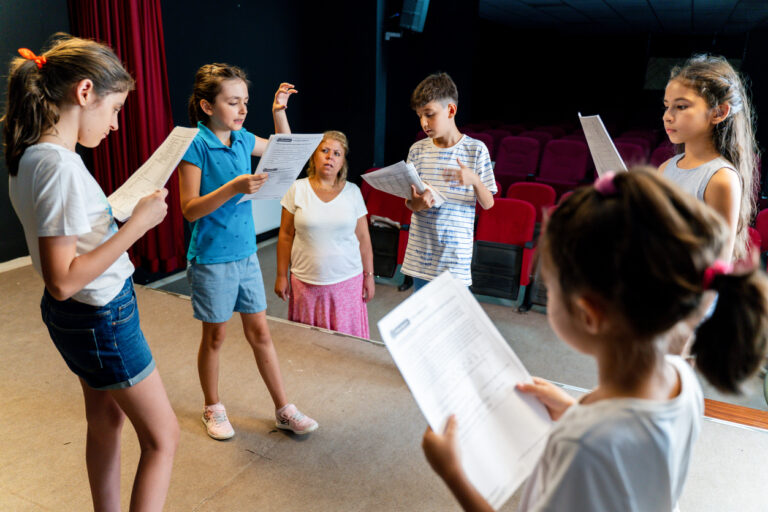
He was my interpreter, and I basically went back three, four times and workshopped all these people and that’s how we cast. We did improvisation, we did it in their own language. It was the only way to cast this film, and when I watched it, it was just an accolade to how Africa is. Asylum seekers have the right to work and the right to move around freely.
We have all these different communities here, so we can create a film and have people from all over Africa. You can put together some amazing faces, but you’ve got to do some workshops. That’s where my skill comes in, where I will sit and go, “Okay, how do we get what we want from this guy?” He’s not going to get a lead role, but he can pass with a performance. So we spend a lot of time doing that. I’ve worked a lot with Norwegians and Swedes.
They love coming to South Africa. I’m working in a Congolese community for two weeks, literally to see if there’s someone that I can use for talent. We do a lot of street casting, which is a lesser status in America.
I’d love to just click a button and go, “Yes, yes, yes, yes, yes, yes,” and then they send a self tape. What a wonderful world. (Laughs) It just doesn’t work like that here.
That seems like a perfect segue into this question, which is, what piece of advice or wisdom would you give to an actor coming in to see you to audition?
Know your lines. It’s one of the biggest things for me, in order for us to work and play. It actually has worked to some extent, people just get so used to it. “I’m going to Bonnie’s. I better know my lines, because we’re going to play.”
So when they come into my room, I’m like, “You ready? Okay, good, first instinct, let’s go.” I really use casting as a playground, so anyone coming to see me knows to know their lines and don’t be late, but be ready to play, because it’s a safe space. A lot of people, I think, make safe choices, and my suggestion is always that there’s different ways to see this character.
We are a third world country. We’re a great shooting destination, but we don’t have a list of 5,000 actors for one role. I’m trying to uplift people and our industry more. We didn’t have enough teachers here, so you find yourself being the coach and the mentor. Recently, someone I worked with saw me in the street and yelled my name.
He said, “I was never seen before. No one ever saw me,” and I just put this guy in two films. He’s a remarkable actor, and he said, “I just want to thank you. You’ve changed my life because you saw me. You saw who I was.”
He teared up, and I remember telling him, “If you cry, I’m going to cry.” (Laughs) But it was a very sincere and endearing moment in our industry, when someone is just incredibly grateful for the time. So that’s what I do. I give time.
Key Takeaways
- Productions keep returning to Cape Town and Johannesburg due to strong crews, positive producer experiences, and a growing reputation for high-quality work.
- Local content is booming, offering increasing opportunities despite global industry uncertainty.
- For actors auditioning with Bouman: know your lines, arrive ready to play, and bring bold choices into a safe, collaborative room.