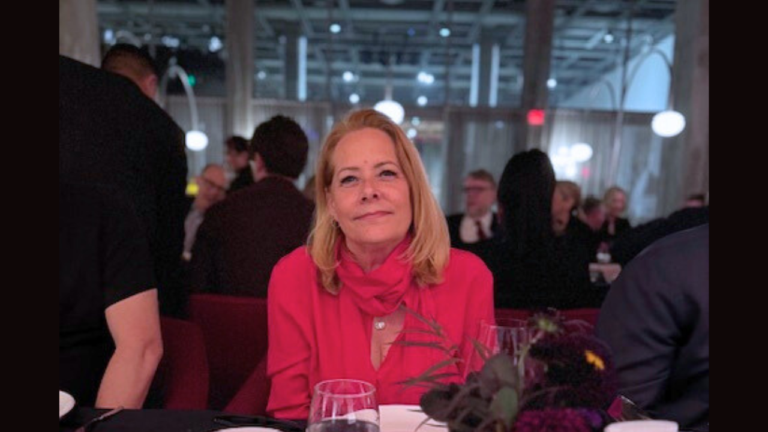

Jeremy M. Rosen is the only name on a very unique Hollywood list. The successful producer of high-quality indie flicks like Body Brokers, Ida Red and Candy Land doesn’t just produce them, he also acts as his own casting director. While there are certainly casting directors who also produce, the number of producers who also wear the casting hat — and only do so for their own projects — is a list with exactly one name on it: Rosen’s.
His newest film, written and directed by his creative partner John Swab, is the gritty crime thriller King Ivory, starring James Badge Dale, Ben Foster, Michael Mando, Graham Greene, Rory Cochrane, Oscar winner Melissa Leo, and introducing young star Jasper Jones.
The movie is a sort of an updated Traffic, focused on fentanyl trafficking, through the eyes of law enforcement, gangs, inmates, migrants and addicts. The riveting, powerful film just completed a limited theatrical run and will be available on demand starting December 15. Rosen spoke to us from Vermont.
Key Insights
- Jeremy M. Rosen is a rare producer who fully handles casting himself, driven by deep fandom and hands-on relationships with actors, agents, and managers.
- Rosen casts proactively from his own curated talent lists, often targeting admired but underrated actors who bring nuance, realism, and emotional dimension to complex roles.
- His casting decisions rely heavily on long-standing industry relationships and mutual trust, enabling him to secure high-caliber talent who elevate the material and sometimes redefine their characters.

You’re the only producer I have met who actually serves as his own casting director. How did that happen?
The second film I produced was Charlie Says, with Mary Harron, of American Psycho fame. We hired the amazing Kerry Barden and Paul Schnee to cast it. I was so active in my producorial capacity with that film, I would sit in on all the casting sessions. I would offer ideas. I’d be interfacing with the talent, the agents, the managers, everyone. It was like I was casting alongside them. Kerry said she’d never had a producer as active as me in the casting process, which I took as a huge compliment.
Fast forward to when John and I started our cottage industry, mostly in Tulsa, Oklahoma, where we’ve turned out all these films. John’s from there. Casting turned out to be my favorite part of it all. Because I’m a fan first, right? All the actors I cast are actors who I admire. I like to think that casting became just a natural evolution or a part-and-parcel offshoot of what I was doing as a soup-to-nuts producer.
I’d be remiss if I didn’t say that I wear many hats, and some of it is a cost-saving mechanism. I’m a lawyer by trade, so I’m doing all the production legal, I’m doing the casting, I’m doing the financing. John is the creative juggernaut, and we compliment one another. But casting is my favorite part.
That’s an excellent segue into the cast. James Badge Dale is always great, and he’s a badass here. How did you end up with him leading the cast?
I’m a huge fan of his. It’s been validating, and even cathartic, to see the deluge of comments as we’ve rolled out King Ivory about how Badge is almost unanimously one of the most unsung and underrated
“character actors” out there. We had a bunch of mutual friends and I knew his agents well at CAA (Creative Artists Agency).
But it was a running joke that I had with him and Frank Grillo, who’s done several movies with me, that it was almost impossible to put Badge and Grill in the same film because they were often competing for the same role. (Laughs) But Badge is one of those guys who is just fantastic, even in smaller roles. It’s things like that I take into mind, literally and figuratively, when I’m casting. I mean, not to get all over the map, but Ritchie Coster, for instance …
Oh, good. I was going to ask about him.
Yeah, is he the proverbial lead actor? Not per se, but my God, he should be. He’s so great, and he’s such a chameleon with respect to the accents and dialects and cultures. So, these are my favorite people. Virtually all of my casting efforts are my proactive outreach. I actually don’t even really want to be pitched much because I know who I’m looking for. I keep running casting lists, and then I reverse engineer it based upon John’s written word.
To John’s credit, we really trust one another, and everything is a conversation, but it’s beyond what I’ve experienced with other casting directors where there are really ideas, and then ultimately it’s all about the director, right? John sometimes even writes with certain people in mind, especially people with whom we’ve collaborated repeatedly, like Grillo and Melissa Leo or Sam Quartin, John’s wife.
How about Ben Foster?
Honestly, Ben has been one of my favorite actors since I was young. We’re the same age, but I was always a fan. My casting efforts live and die by my relationships. Ben was at UTA (United Talent Agency) his entire career, so when his longtime agent decided he didn’t want to be an agent anymore, Ben moved to Range Media Partners, where I’ve got great relationships.
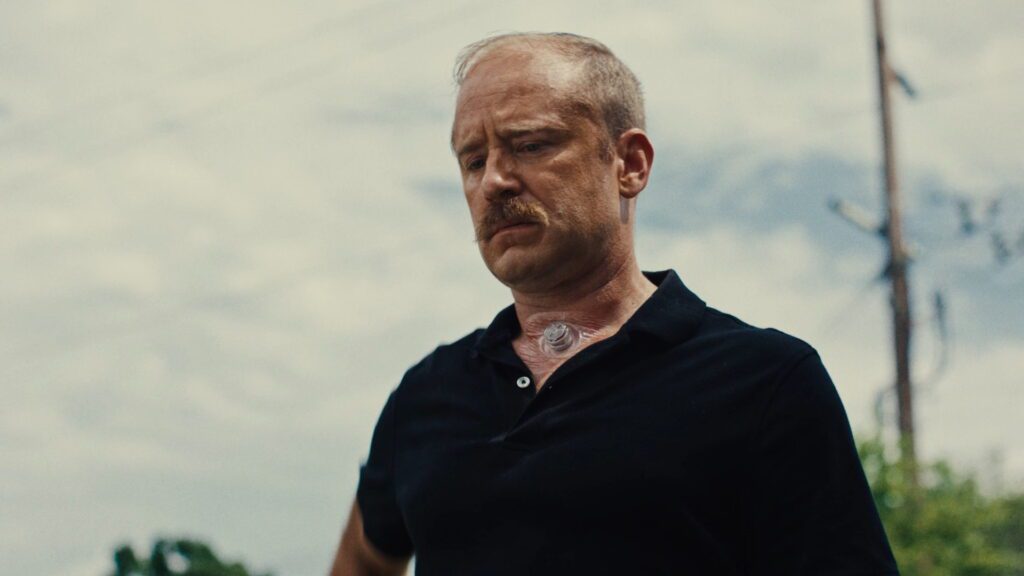
This is a prime example. I called Kevin Hussey over there, who brought it to Ben, and long story short, this was the first project Ben did as a Range client. That’s when John and I knew that now we had a movie. He elevated what we were doing and really made it his own. The tracheal stoma was all his idea.
How about the casting of Michael Mando? He has built a heck of a career as a villain.
I feel like I was the last one on Earth to find Better Call Saul. I said, “Oh, my God. Mando.” So I reached out to his agent at UTA, and said, “Listen, I know this is a cartel role, and it may be the last thing he wants to do on the heels of the Vince Gilligan world, but man there’s no one I could see playing [the role] that’s like him.” Mando said he didn’t want to play a cartel guy again, and he’s got so much else going on now with the new Spider-Man movie and the TV show Criminal, but he was at a crossroads.
He was honestly thinking he wasn’t going to act anymore. So he’s credited me and John with re-energizing his acting life, which is so humbling. Michael — he did something that was so far beyond what I envisioned. He brought this heart and humanity to it. He wasn’t just a villain. It’s like Neil McCauley in Heat — he’s someone you really want to root for. Yeah, they may be objectively committing crimes, but they still have families. They’re multi-dimensional characters, and that’s very much what Michael brought to Ramón Garza.
Let’s talk about Jasper Jones, as James Badge Dale’s son, Jack. I had never seen him before, and he’s quite good.
Our go-to Oklahoma local casting director is Chris Freihofer, who’s based in Oklahoma City. Oklahoma is a relatively small market, and it’s how and why John and I have been able to become bigger fish in a smaller pond there, production-wise.
Chris will put together the local hires, the folks that we’re not flying in and putting up and paying larger salaries to. He’ll provide a more traditional casting portal of Oklahoma and Texas-based local talent for these smaller supporting roles. Often these are younger folks who have little to no experience. They may not even have their SAG card.
John and I were just trolling through the three or four dozen local names who Chris had read for this role of Jack West. Jasper just really stood out for us. Obviously, he’s an Adonis, and we felt like he had that intangible. He had this vibe about him. We felt like he was raw and unhinged enough where he could really take it there. And of course, his appearance didn’t hurt. Ironically, it felt like he was almost too good looking for the role.
I’m so proud to say that William Morris signed him off of his King Ivory performance, and he’s since filmed the Jack Reacher spin-off series. We really punch way above our weight class when it came to local casting.
It sounds to me like part of filmmaking for you is just an excuse to work with people you admire.
(Laughs) You’re absolutely right. Honestly, I made a career prior to this representing music talent as a lawyer and a manager. Film was the creative outlet that I always saw, and the actors and actresses are the North Star for me. So the prospect of working with them and casting them and being involved in whatever capacity, is … it’s humbling, and it’s a real thrill. So I couldn’t agree with you more.
Key Takeaways
- A producer-led casting approach can create a uniquely cohesive creative vision, especially when the producer is deeply immersed in talent discovery and character interpretation.
- Strong personal relationships with agents and actors can be transformative, opening doors to top-tier talent who may not respond to traditional casting outreach.
- Rosen’s philosophy shows that great casting is about instinct and admiration, choosing actors who resonate personally and can bring unexpected depth to challenging roles.