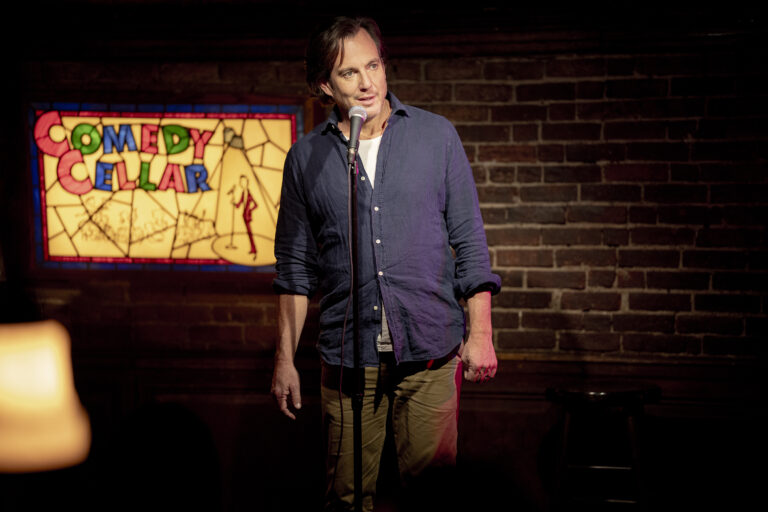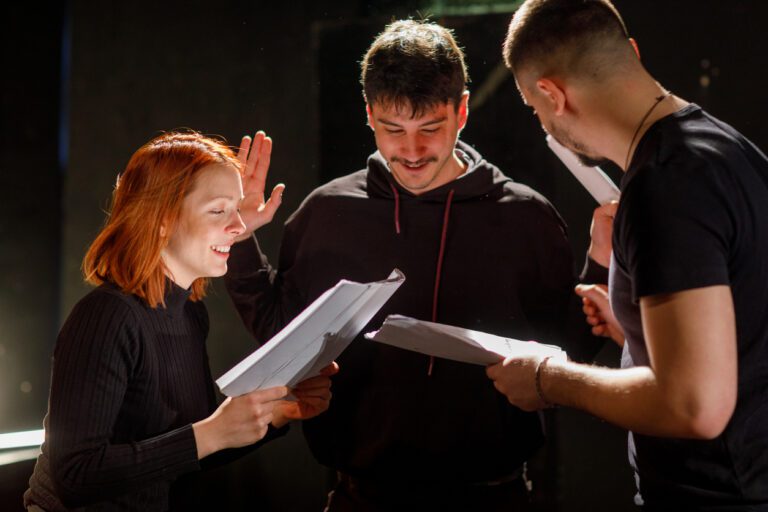

Shayna Markowitz has been working in the casting world for close to two decades now, and over that time she has risen to the top of her profession. In just the last few years, she has put together top-notch casts for films like Ocean’s 8, Joker and Maestro, where she first worked with director Bradley Cooper. She has also cast the filmmaker’s third film, the comedic drama Is This Thing On?
The film stars Will Arnett — who co-wrote the script with Cooper, Mark Chappell and John Bishop — Oscar winner Laura Dern, Andra Day, Christine Ebersole, Ciarán Hinds, Sean Hayes, Peyton Manning, Amy Sedaris, real-life comedians like Jordan Jensen and Chloe Radcliffe, and Cooper himself in a smaller, supporting role.
It’s a fantastic cast and could have Markowitz in the running for the Academy Awards’ first-ever Casting Oscar. The film opens nationwide December 19.
Key Insights
- Shayna Markowitz’s long-standing collaboration with Bradley Cooper helped attract major talent willing to take smaller, unconventional roles.
- The film’s authenticity was strengthened by casting real stand-up comics after an intensive deep-dive into New York’s comedy scene.
- Casting challenges—from balancing a diverse group of comics to finding two believable child actors with sibling chemistry—shaped the film’s emotional core.

How did you first connect with Bradley?
Bradley was a producer on the first Joker, which I cast for Todd Phillips, and so he was aware of me, even though we didn’t really work together on that one. Then he called me for Maestro, and so we did that together. Then, you know, he called me back for this one.
Obviously, Will came with the project because he co-wrote it. But what about the rest? Let’s start from the top down. What was the process of finding Laura Dern as Tess?
Laura was all Bradley. He had told me about the project before she was on board, but Laura was all him, so I can’t take any credit for that. But she’s so brilliant, and I feel like she just totally took the movie to another place. So we’re really lucky to have her.
What about the supporting cast? There are a lot of big names in small roles, and not always in the most sympathetic ones. Andra Day, for instance, plays a pretty unlikable character. What was the process of putting that all together?
I think what is such a gift when you work with Bradley is that people want to work with him. That makes my job a lot easier, because people that normally wouldn’t take on roles of a certain size do because they want to collaborate with him.
So you’re already getting people who say, “I don’t care, I want to be a part of this.” And then of course, roles shift and change. I’m always amazed when I work on a movie, and how a role is written, and then how it changes, even in the audition process, and then again once the movie comes out. A lot of times there was a lot more in the role that just is sliced down.
Andra was somebody that Bradley had in mind before. We had conversations about it, but ultimately he wanted to go to Andra, and she wanted to do it. I can’t speak to why an actor decides to do something, but certainly we haven’t really seen her do anything like this.
I think that is unique and certainly even as a casting director, makes me think of her differently than I had before. Sometimes people want to take a job to flex a different muscle or work with a different filmmaker.
What about Christine Ebersole and Ciarán Hinds, who has one of my favorite scenes in the film, as Will’s parents?
That was much more of a collaboration. They’re both delicious in those roles, and though they’re not huge roles, you really get an insight into Will’s life and his upbringing. Funnily enough, that scene where Ciarán comes to the club was written for him when we were practically shooting.
It’s amazing how making a movie can inform a few things. Casting Ciarán really informed who the character was, who Will’s dad was to him and what that relationship was, but amazingly, there was a scheduling thing and we were going to lose Ciarán in a different scene.
Then all of a sudden, Bradley said, “We have this amazing talent, I want to make sure we use him.” So he wrote that scene very quickly to get a little bit more of Ciarán into the movie, and I can’t imagine the movie without that scene. It’s amazing how sometimes even logistical things can add a layer.
Speaking of talents. Peyton Manning is quite good in this. How did that happen?
He is so good in the movie. You know, it was this gamble of, is he going to take you out of it? Ultimately, we felt like it had to be him, because, first of all, he’s so good, and is totally believable as this obviously Olympic athlete.
But he also feels completely out of the world of New York in a way that brings a flavor that’s so much the opposite of what everyone else in the cast brings. He has a heft that he’s able to match Laura in a way that not every actor could do. It didn’t feel like a cameo or stunt casting. I really credit him for just doing a great job.
I appreciated the casting of real comedians, especially Chloe Radcliffe and Jordan Jensen. Were those also people you know of before? Or was there more of a search?
It’s always a combination. You have people you know and you’re aware of, but with any project, you immerse yourself in a world you know, where I obviously am aware of comics. I love stand-up, and I know many actors, but you really do a deep dive in a way that I hadn’t before.
Bradley wanted to populate Will’s crew with people that were not recognizable, that weren’t, oh, we’ve seen them a million times, people that really felt like up-and-coming open-mic comics. So we researched who was performing at those clubs in Brooklyn and in the city and we met over 100 comics. We watched their stand-up, then we had them do a couple minutes of material for us.
We had them do lines, because you can be a great stand-up, but the acting muscle is not there. They needed to have improv, stand-up, acting, all of it. I feel so glad that all these comics were a part of it, and hopefully we’ll watch their careers blossom.
Was that the biggest challenge of this particular project, finding the comedians?
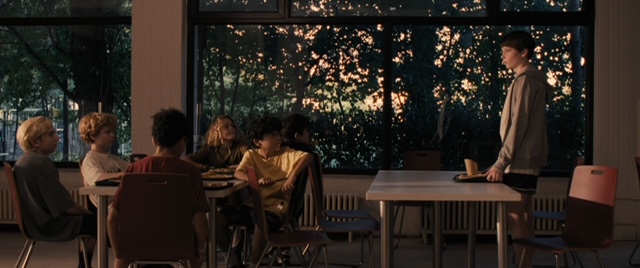
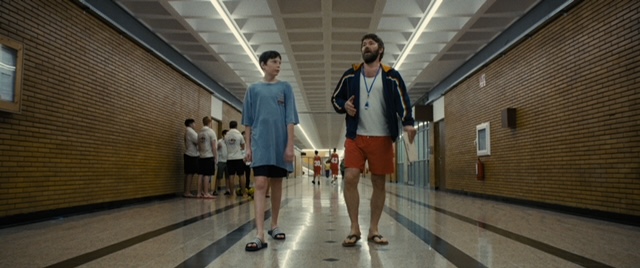
Everything has its bumps and its challenges. I think there it was almost an embarrassment of riches. There were so many interesting, diverse comics in the city. It was more about figuring out how to blend them and balance them and what group was actually going to have the right chemistry. I think the biggest challenge was probably casting Will and Laura’s children.
That was actually my next question, about the two boys. It feels like every time I talk to anyone casting kids, they end up seeing thousands for just one or two roles. Did that happen here?
The scary thing about casting a child is you have something on the page and you have to find someone who hits it, and you just have no idea if they exist in this exact age group in this city. Budgetarily, we had to look within the tri-state area, and that eliminated a lot of children.
We could only look at a certain pool, which helped because if you’re watching a thousand auditions of children, it becomes hard after a while, and you’re bleary eyed by the end of it. So we saw maybe a few hundred children, though this was harder because it was two kids, who had to be brothers, and who not only had to relate to their parents, they had to relate to each other, with chemistry and physicality.
There’s always bumps, but I feel like we get the cast we’re meant to get.
When you have done a good job, when you have hit the ball out of the park like you have here, do you acknowledge it? Do you allow yourself to take some credit and acknowledge the thing that you’ve done? Or do you just kind of say, “Okay, did it. On to the next?”
Casting is very collaborative. It’s a real partnership with Bradley and me, and I feel really lucky that he’s open to my ideas or looking at roles a different way. So in that way, I could never take full credit for something, but I feel so proud of this cast and this group and these actors, so, yeah, I do feel really proud.
I’m a pretty humble person, and there are certainly times and projects where there’s a lot of different cooks in the kitchen, and sometimes you don’t feel 100% proud, and that’s not the best feeling. So it does feel nice to feel really proud of a group and of a film. We’re all a team to make it happen, and I could not be happier. It was such a joy to see this come to life.
Key Takeaways
- Strong director–casting partnerships can draw high-caliber actors who elevate even small roles.
- Grounded performances often come from aligning casting choices with real-world communities, such as emerging comedians.
- Flexibility, collaboration, and trust in the casting process ultimately lead to a cast that feels organic, layered, and essential to the story.