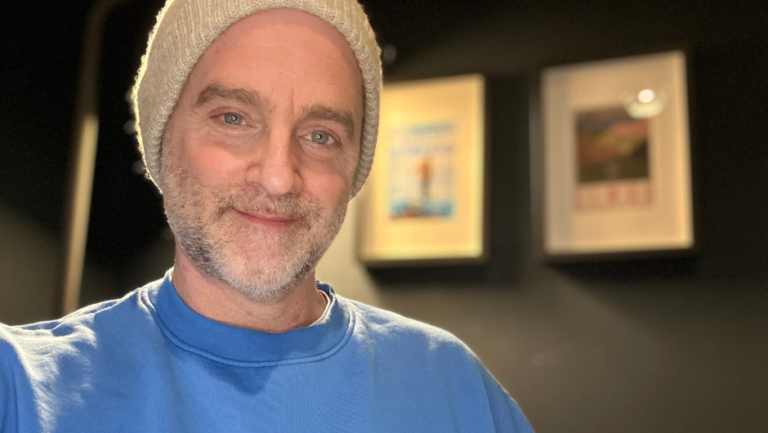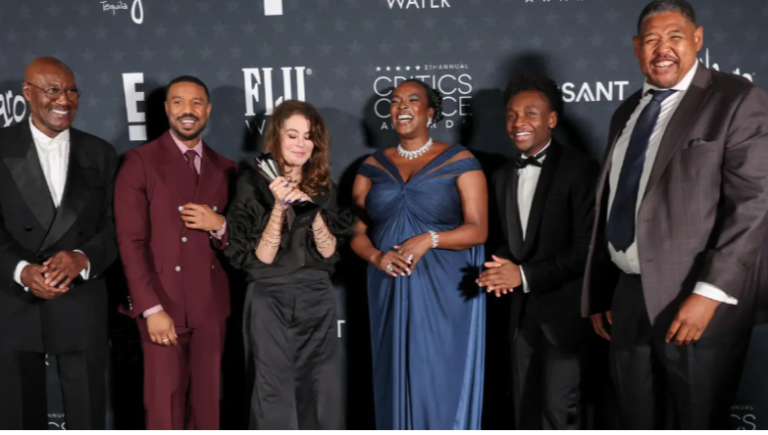

Robin D. Cook is a seven-time Emmy nominee and 19-time Casting Society Artios Award nominee whose credits span prestige television and acclaimed films, including The Handmaid’s Tale, Matlock, the Oscar-nominated Room and cult favorite Scott Pilgrim vs. the World. Over the course of her career, Cook has also collaborated extensively with visionary filmmaker Guillermo del Toro on 10 projects, most recently Frankenstein.
In an exclusive interview with Casting Networks, Cook discusses how Frankenstein came together with several key roles already attached, including Oscar Isaac as the brilliant, but obsessive surgeon Victor Frankenstein, Christoph Waltz as Heinrich, the wealthy arms manufacturer who funds his experiments, and Mia Goth as Heinrich’s niece, Lady Elizabeth, with whom Victor becomes instantly smitten.
The role of The Creature, Cook reveals, had already been cast, until just nine weeks before production when the actor dropped out. That last-minute vacancy would ultimately lead to the casting of Jacob Elordi, whose portrayal has since earned widespread critical acclaim and awards recognition, including a Critics Choice Award for Best Supporting Actor.
Key Insights
- Jacob Elordi was cast as The Creature in Frankenstein after a last minute four day search just nine weeks before production began.
- Guillermo del Toro selects actors based on emotional truth, often saying he casts by the eyes rather than just by performance.
- Physical demands, from 11 hour makeup sessions to period acting skills, play a major role in casting decisions for large scale productions.

When the role of The Creature fell through just weeks before production, what kind of challenge did that create for the film?
We had nine weeks before production started, but only four days to re-cast the role, and Guillermo had very specific requirements: the actor had to be over 6-foot-5. He had to be vulnerable, yet commanding. He had to stand his own with Oscar. He had to have the vulnerability. The creature starts off like a child — a baby —and has so many different layers. He has to find himself and he has to experience every emotion.
Beyond performance, what practical considerations came into play when casting such a physically demanding role?
The makeup process. Whomever we hired had to agree to sit in that chair from 8 to 11 hours. Sometimes the call time was at 10 or 11 at night [to begin the makeup process] for the next morning’s shoot. That is a lot to ask. You had to have an actor who was fully committed, along with having all the requirements of what we were looking for.
Also, it’s a period piece. Some people are period actors, and some people are not. Some can do both. Guillermo met with three people. The minute he met with Jacob, it was pure kismet. Today, I truly cannot imagine anybody else in that part.
How did Jacob come onto Guillermo’s radar?
Other people had mentioned Jacob to Guillermo, including his wife and (Netflix co-CEO) Ted Sarandos. He went and watched Saltburn. He watched Priscilla … They had a meeting and Guillermo said that when he looked at Jacob’s eyes, he knew that was it.
Let’s talk about casting young Victor. How did that role evolve during the process?
In the first couple of drafts, there were actually two young Victors. There was a 10-year-old and a 15-year-old. We searched all over the world. We searched in Spain, Portugal, England, Scotland, America, Canada. When Christian Convery [a dual Canadian-American actor] auditioned, Guillermo fell so in love with him that he changed the script and incorporated both parts for Christian to play.
Are there any actors you’re especially proud of in this film?
I’m thrilled with everyone! We hired Ralph Ineson to do a small little scene, and when he was doing our show he got The Fantastic Four. We got Bern Gorman to do three lines. He is a phenomenal actor. You look at Charles Dance and you go, “How was that not written for him?” because you couldn’t imagine anybody else in that role. That’s Guillermo, though. He lets the actor do what they came on set to do.
I’m so proud of Mia. Originally, she was playing three parts. Then one got cut so it was two. A lot of people didn’t even realize she played two roles. She was so fabulous. [In addition to playing Elizabeth, Goth played Victor’s mother Claire, who died after giving birth to William.]
You’ve collaborated with Guillermo on such films as Nightmare Alley and The Shape of Water. What makes that working relationship successful?
It’s very organic. Guillermo knows so much talent and he watches so much. I can mention an actor and he’ll know who that actor is. There’s definitely an ease because we’ve known each other about 14 years now. When we have meetings to discuss casting.
He will have ideas, I will have ideas, but we’ll also audition. When he sees an audition, he knows right away. Guillermo always says that he casts by the [actor’s] eyes, but it’s Guillermo’s eye that actually casts. He is a true genius.
From casting shows like The Umbrella Academy to Star Trek: Discovery to the upcoming Handmaid’s Tale spinoff The Testaments, what advice do you have for actors coming in to audition?
Be on time. That’s a big one. Make a choice. I know it’s hard when you only have the sides [to work with], but make a choice anyway. I am not a fan of props. I find them very distracting, so less is more. Ask questions. Those 10 minutes that you have, those are your 10 minutes. Be courteous and kind, but if you’re not feeling it, say something. Take possession of that time.
Do you prefer an actor to audition for you in person, or send in a self tape?
Try to be in the room if you can, even if it’s on a Zoom, because the other person may have more information [for your character or the scene]. And if that in-person audition doesn’t work, self tape afterwards. Say, “You know what? I didn’t like my audition. Here’s a self tape.” They may or may not watch it, but you never know.
This year marks the first time the Oscars will recognize casting with its own category. What does that mean to you?
I’m thrilled for all casting directors. It is nice to finally be recognized for the amount of work that we do. Casting directors can change what’s on screen. It doesn’t matter who’s directing or who’s producing. The talent we bring in, the suggestions we make, we can change what’s on the screen. Did you watch Nouvelle Vague?
That casting — wow! It was fantastic casting. But if someone else had cast it, it would be different. Even on Frankenstein. To get that respect and that acknowledgement, I am so happy for my peers. Would I like to be one of the five [nominees]? Absolutely. But I’m thrilled that it is finally being acknowledged.
Key Takeaways
- Being adaptable and available can lead to career defining roles when unexpected casting changes happen.
- Strong, specific choices in auditions matter more than over preparation or elaborate props.
- Casting directors and filmmakers look for emotional depth, professionalism and presence just as much as technical skill.