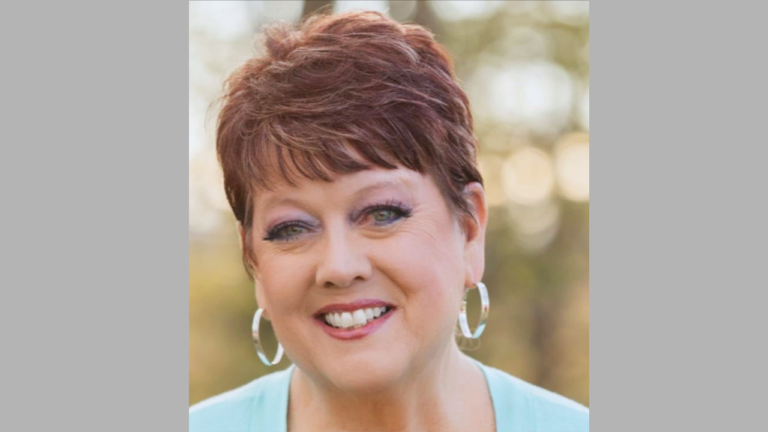

Every casting director’s story is unique, but perhaps none are quite as unique as Paul Sinacore’s. A former musician-turned-actor-turned-academic who came to casting in his 40s and only did so because he couldn’t afford grad school, he has built a thriving business while also keeping active in academia. Not only does he work extensively in indie film and commercials, he is also on the Alumni Advisory executive board at his alma mater, UCLA.
It’s easy to wonder when he finds time to sleep, but he insists he sleeps just fine, even as his first major studio film is about to be released in January. The musical biopic Clika hits theaters on January 23, when it will be released on 1,700 screens. It’s a huge step forward for his career. He took time out from his crazy schedule, which includes writing, directing and producing as well, to chat with us from his home in LA.
Key Insights
- Casting decisions often come down to alignment and authenticity, not perfection or trying to be “right” for the role.
- Professionalism, presence, and preparation can set actors apart even when the final choice is out of their control.
- Casting directors notice effort, growth, and how actors show up just as much as the performance itself.

How did you get into casting in the first place?
Oh, wow, that’s, that’s quite a story.
It always is.
(Laughs) It was never a career choice to do casting. I came out here with a band, called East of Gideon. We got signed, played with bands like Tool and Rage Against the Machine, and in ’91 we toured with Nirvana. By 1996, I realized that that rock star dream was probably not going to come true.
My former manager suggested I try acting, and I got into SAG pretty quickly. I was a featured extra in movies like Father’s Day and Black Sheep and Escape From L.A. and stuff. I did that for a while, dabbling in music and things like that. I started flipping houses, but then the housing bubble burst in 2008, so I went back to school.
I’m going to guess it wasn’t film school.
No, I already had a degree in recording engineering and music business and television production. I got into environmental activism. I went to PCC in 2010 and got four associates degrees, then earned a transfer scholarship at 41 years old to go to UCLA. I went there 2012 to 2014 and got two bachelor’s degrees, one in psychological anthropology, and social cognitive neuroscience, social psychology.
How on earth did that lead to you getting into casting?
Well, I got accepted to USC for documentary filmmaking, but I couldn’t afford it. I had friends working in a big casting office, they lost their main guy, and they recruited me to run this big casting office.
Wait. Why would they do that if you had no experience casting?
My expertise coming out of UCLA was ethnographic, person-centered interviewing, so I worked as a lead researcher for projects that the casting director had for Errol Morris. So a lot of it was very sensitive. And then my expertise as an anthropologist also really fit.
My ability to be in the spotlight, be at the forefront, be able to take the pressure, deliver consistently — I’m sort of built for it. I think a lot of that is what you look for, for somebody that’s going to do this job.
Okay, that tracks. Sorry, carry on.
(Laughs) So I cut my teeth in commercial casting, essentially for four plus years, and then went out on my own. I did big Super Bowl stuff, very high level. I worked with Beyoncé, Justin Timberlake, Lil Nas X, and just loved it. I parlayed that into my own company, Paul Sinacore Casting, and started doing Unsolved Mysteries for Netflix.
I noticed you do a lot of indie film now, too.
Yeah, so that was the shift. I cast Eli Roth Presents: The Legion of Exorcists, In Ice Cold Blood with Ice-T, a lot of the Shock Docs stuff, I got into CSA and then the Television Academy, but the passion was always developing independent film. A lot of colleagues I have are filmmakers, and so I was casting on those fronts, and now Clika will be my first major studio casting credit with the CSA initials behind it.
We’ll get to that, because I really want to talk to you about it, but what was it about indie film that so appealed to you?
There’s an involvement in shaping the creative part. I’m very creative that way. I write and direct myself as well, and I can help realize a vision for a client. I love elevating projects. That’s what I take pride in, the joy of that, and I always want to be part of something great.
The other thing is that I love is to recognize talent. I do a lot of workshops with actors, scene reads, things like that. Coaching for auditioning and feedback. So I try to stay engaged as much as possible with the process, and see how actors develop.
I think part of what the appeal is for independent film is the discovery, being involved at such a ground level. Once I found it, there’s really no going back.
That feels like a perfect segue into talking about Clika. Tell me about putting it all together.
It was a really amazing project. I’ve been working with Michael Greene, the director, for years. It started out as a small budget film, then they found more money and came to me to elevate the cast. Jimmy Humilde, who financed it, is really critical about what he wants.
He loves American films. He wanted to get Peter Greene, so I got him Peter Greene, and then just built out the cast from there. We got Eric Roberts, and ended up getting Master P. Each casting is a story unto itself. He lost his daughter and hadn’t been in front of the camera in a long time.
It was an interesting thing to try to get him to come back. I think he needed it at the time.
With all the indie film work you do, all the auditions, you must see an enormous amount of actors. What piece of advice or wisdom would you give to someone coming in to audition for you?
What it comes down to is, it’s either about you or it’s not about you. Either you’re the person the client or the director is looking for, just based on an appearance, or you’re not, and the rest is what you bring to it. So, leaning into your strengths, what you do best, and bringing you.
The other part is professionalism. Just showing up and being in the moment. Winning the room. Give your all there, be present, and then when you walk away, leave it there. A lot of times you’ll be in the running and you nailed it, but they were just looking to check another box.
Those are beyond your control as an actor.
You gotta take the positives where they are and understand that you’re doing what you love to do. Each opportunity that you’re in for an audition is an opportunity to sell yourself. That’s a wonderful thing, and you can’t take that for granted.
Find your strengths and lean into those things, because that’s what makes you unique. That’s what makes you castable. If you can present that and be comfortable in your own skin, within the parameter of a role, then I think that will benefit you in the long run.
Believe me, those casting directors that you’re in front of, they will remember your effort and who you are.
Key Takeaways
- Lean into your strengths and bring you into the audition instead of trying to guess what they want.
- Show up prepared, grounded, and fully present — then let go once you leave the room.
- Every audition is a chance to build a lasting impression, even if you don’t book the role.