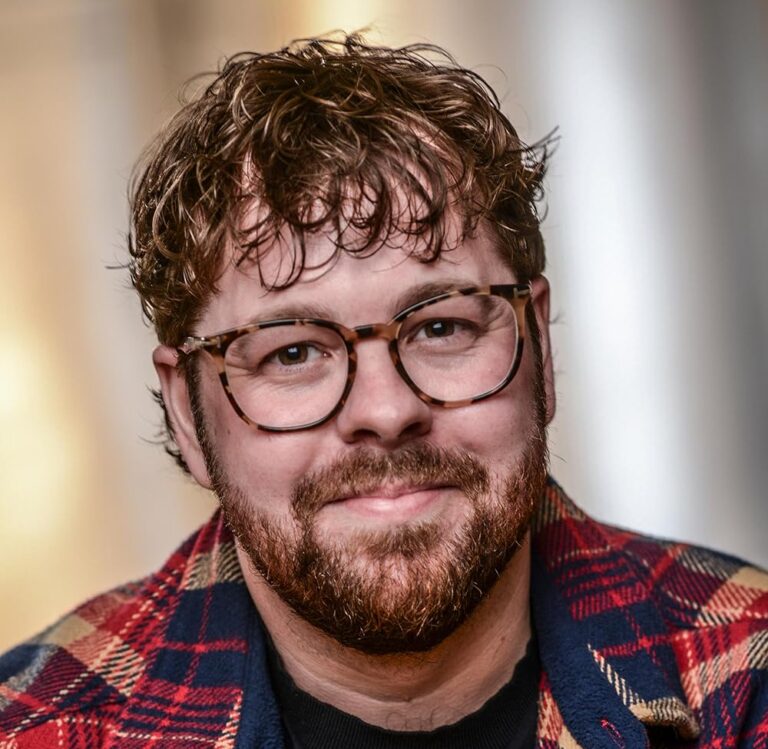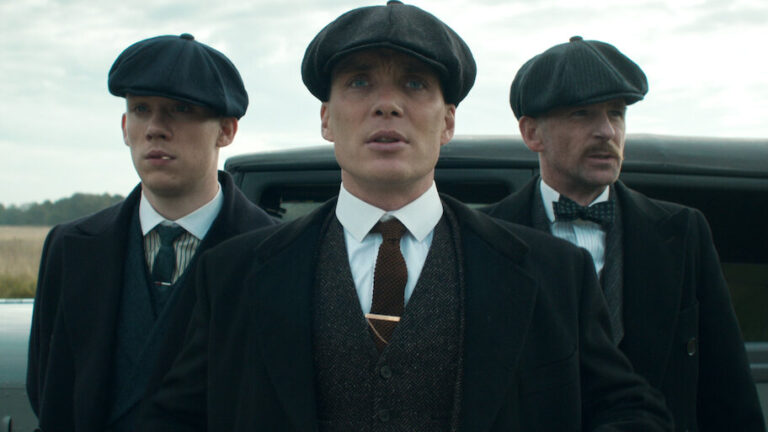

Maurilio Mangano might not be a casting name you know, but to be fair, he lives and works in Rome, where he has become one of the hottest and most in-demand casting directors in the Italian film industry. He’s putting together top TV series like Miss Fallaci, for which he earned an Artios nomination, and Mussolini: Son of the Century, directed by Oscar nominee Joe Wright.
He’s also started working on English language projects, like the Angelina Jolie film Maria, and the upcoming Kevin James-led rom-com Solo Mio. It’s a career on the rise, with lots of big things in store. He spoke to us from his office in Rome.
Key Insights
- Treat self tapes as a creative space, not a technical chore, and build a world so vivid in your mind that the casting director can step inside it with you.
- Remember that casting is a collaborative search for the right “host” for a character, not a judgment of your worth as an artist.
- Stay curious and adaptable, because technology and globalization are reshaping auditions into a more democratic and far reaching process.

How did you first get into casting?
Well, I started with theater in school until my 20s, but I realized that it was better to work with actors than being an actor. So then I started working as an assistant in the theater, then on set. Then when I was 27 or 28, I got the opportunity to work with a famous Italian casting director.
My first casting was a soap opera, but she did a lot of art house movies, too. She was working with a lot of the top directors at the time, and I learned a lot from her. How to work fast, how to work with every kind of actor, and the idea that it doesn’t matter the project … it matters the way you are doing things, the way you think about the casting and the casting process.
I think it’s pretty common for casting directors to have come from a performance background. It feels like a real advantage, because it means you speak the language of an actor.
Yeah, I do. I understand the feelings of an actor sometimes more than directors, because I know how they feel when they are in a selection process, and the pressure when you are performing, thinking that this is your chance to be part of a movie.
I also understand the fragility of an actor, but at the same time, I think the big difference between us and a director is that we meet hundreds of actors per week, so our experience is with thousands of possibilities. I think this is why actors love to work with me in a room, because they feel that we’re talking same language, and it’s easier for me to find what I’m looking for.
Do you still have a lot of actors come in the room? Or are you much more on Zoom, like they are here in America?
We don’t do Zoom. We do a lot of self tapes right now, after COVID, but also because most of the actors, they work in Rome, they live in Rome, so it’s very easy to meet them in person. At the same time, when they first learned how to self tape, they thought it was only about production, but some of us started to let the actors feel that self taping could be a creative process where they can [have a] dialogue directly with the camera and can create their own space in the world, in their own house.
Can you walk me through how you engage in that dialogue with actors, and how you are able to work with them to improve their self tapes, so as to help you with your job as well as theirs?
My studio … we are kind of nerds. (Laughs) We love technology, we love new languages. But [when] you are in a room, you can feel something, because the room of a casting is like theater. So when the actor is present, you can feel something that, of course, is important for a selection, but at the same time it could be distracting you from what is on the screen. Because what is on the screen is totally different from what is in the room, since the actor there is [using] his body [to communicate].
What we see on the screen is more about our perception of the actors. When you are self taping, you can create your own world, and if this is real in your mind, and you can see it, then I can see it, too. I can be in your world, and that’s the point.
Sometimes it happens that when you’re in a room, you can feel this empathy with the actor, but then you watch the tape and you see that, okay, there’s nothing there. Sorry, it’s not that easy to tell you in English about these ideas. I hope that is clear what I’m saying.
No, no, you’re doing great. It’s interesting how many people talk about the differences between how it used to be and how it is now, how the audition process has changed, and how so much of it is online or self tape.
Yeah, but you know, also, I think the self taping is a bit more democratic in a way. Five years ago, six years ago, how many people could I see for a project in a week?
Maybe I’m running 15 per day. With self taping, I can explore more, and then if I see something I like, I can say, “Oh, interesting. Let’s call him in the room.” And because of technology, I can do casting everywhere, and that’s so cool.
I worked with Pablo Larraín. I was the head of casting for Maria, and it was so cool that I was working with three amazing casting directors: Mathilde Snodgrass in France, Sofia Dimopoulou in Greece and Katalin Baranyi in Hungary, and we were working together as if we were in the same office in the same city while we were just online.
The artistic process was so cool, because we had this huge pool of people all around the world working on the same project. It was amazing. But I can understand that sometimes the actor thinks, “Oh, you are not calling me in person …” So for me, it’s important to stay in between.
Since you mentioned Maria, I know that most of your work is in Italian film, but Maria and now Solo Mio are both English language films, with American stars. I’m curious about the process of crossing over and being able to start working on those kinds of projects.
It’s not that easy, because of course every industry has its own rules, but because of technology and globalization, you can easily find the way to change your methods and understand how to do things. I’m in the International Casting Directors Association (ICDA) and the Casting Society (CSA), and there are a lot of panels.
Everything is online, so you can learn a lot of things from amazing casting directors from Los Angeles or New York. I think the main point is to be curious and to never be afraid to ask how to do something.
Do you find that there are major differences between the way that you work, and the way someone in New York or Los Angeles works?
This is funny, because Italians, we are kind of more chaotic. Our directors are asking the actors to do crazy things, like using a lot of props and doing the scenes with a lot of actions, and sometimes in the UK or the United States, they look at our tape and say, “What is that?” (Laughs).
So for us, it’s easier when we work with UK or American casting directors to ask for the actors to do less. Sometimes [we ask them to] do nothing, and they’re like, “Nothing?” Because our actors, they’re [used to] big.
I know. I’ve seen Italian movies.
When I was working with Joe Wright for Mussolini: Son of the Century, the actors sometimes, knowing that he was from England, they were trying to act in an English way. And he was like, “Why are they doing that? They are Italian.” (Laughs) So we were just asking them to do it how they know to do it. The Italian way.
You said you sometimes see hundreds of people a week, with tons of auditions and self tapes. With that in mind, what piece of advice or wisdom would you give to someone coming in to see you?
An actor who comes to me or to another casting director should feel that he is not judged by someone, but is working on a process to find the [right person] to host the character for a while.
I’m interested in the process, and to give to the director different options that could fit with with the character we are looking at the moment. That’s the main thing, to not be afraid, to feel free to work together to give us ideas and inspiration.
Key Takeaways
- Whether in the room or on tape, focus on what reads on screen rather than relying on in person energy or theatrical physicality.
- Bring your authentic cultural and personal instincts to the role instead of trying to imitate what you think another industry wants.
- Approach auditions as a shared exploration with casting, offering ideas and inspiration without fear, knowing they are looking for possibilities, not perfection.