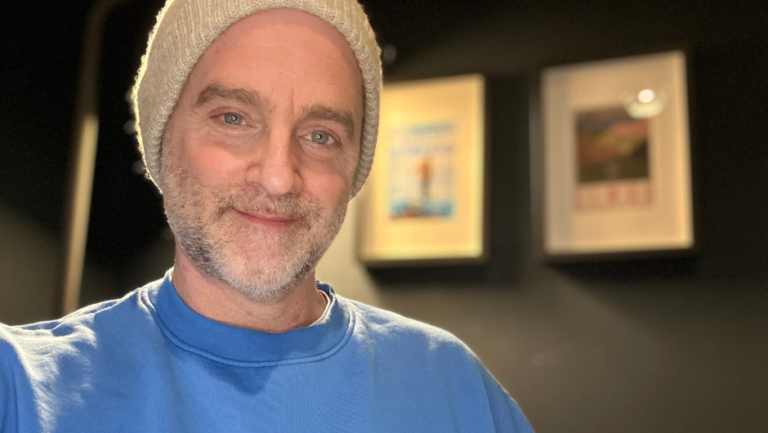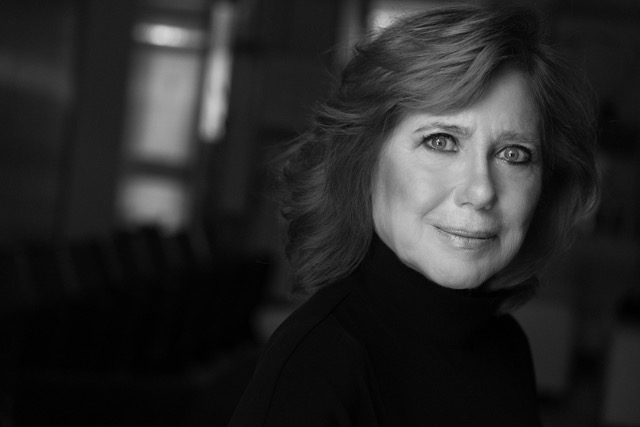

Like a lot of casting directors, Dan Jackson started as an actor before he transitioned to behind the camera. The Scottish professional lucked out when he first made the move, connecting with fellow Scot Kahleen Crawford, with whom he has now worked for years. The two still collaborate, but Jackson has established a pretty badass solo career as well, with help from his associate, Ross Barratt.
He’s possibly the busiest casting director in Glasgow, working on local productions like the long-running TV show River City, and the Scotland-set Paramount+ drama series Cold Water, starring Andrew Lincoln, now streaming. He’s also got the indie film Borges and Me coming out later this year. He chatted with us from his office in Glasgow.
Key Insights
- Many casting directors, including Dan Jackson, began as actors, giving them firsthand empathy for the nerves and pressures actors feel in the audition room.
- Strong casting comes from deep knowledge of talent, often built through years of watching actors’ careers develop and maintaining relationships across the industry.
- Casting directors often advocate for actors they believe in, sometimes pushing productions to take a chance on performers who simply need the right opportunity.

How did you get into casting in the first place?
I was an actor. Yeah, it’s one of those. I think now, actually, there are really great courses in the UK where you can go straight into casting, and you come out ready to take the next step. But I didn’t really know anything about casting. I left school wanting to do something in this field, and the only thing really would be acting.
I applied for what was called the Royal Scottish Academy, and it’s now called the Royal Conservatoire. I got in, studied there for three years, got an agent, and I guess I was fairly successful in the way that I was a [working] actor. I did some really lovely work, and have made friends that I’m still friends with now, moved to London, of course. But it wasn’t really feeding my soul.
How did you transition out of that into casting?
It got to the point where, about 2006 or 2007, I had become quite friendly with a few of the casting directors who would always get me in, and I would land jobs with them. I got a job at [UK casting platform] Spotlight, and a casting director would come and say, “Okay, this is what we’re casting for today.” I would get all the sheets. I would have to hand them out to the actors. They’d have to put their address, their phone number, take a Polaroid picture, all of that stuff.
Because I was working part time, I got to know some other casting directors, and would just let them know, “I’m here. I’m willing to work, get coffee, whenever.” I just immediately enjoyed being behind the camera. I found it fascinating, and, at that point, wanted to leave London. I’d done almost 10 years, I was pretty much done, and just a happy coincidence, as I was moving back to Glasgow, I got a meeting with Kahleen.
I’ve talked to Kahleen a couple times. She’s the best.
Yes! I heard through a friend that she was maybe looking to find somebody to work with after she and her previous partner went their separate ways. That was 2007, and we’ve been working together ever since.
You said that acting wasn’t feeding your soul. What was it about casting that did?
To go back slightly, I think with acting, and this isn’t any fault of my agent, but I was going for roles in shows that are probably things I wouldn’t watch. TV dramas that weren’t really my taste, necessarily. So I wasn’t feeling passionate necessarily about the jobs I was getting, which is fine.
I wasn’t going to complain about it, because a lot of actors weren’t even getting those parts. But there was a slight crossover where I was still going up for acting roles, and the light bulb moment was when I got offered a role where I had to then choose to stay with Kahleen and work on my casting career, or go off and do this job, which was going to be a semi- or regular role in a TV show, which would have been more money.
I chose to stay with Kahleen, and something clicked inside me, where I realized I’m just more comfortable behind the camera. The process of starting on ground level with a project, of getting a script very early on, starting from that ground level and and seeing it to completion, really just fascinated me.
I would think you’d still get the creative outlet of acting by being able to read with people, by being able to talk through performances, giving notes, that kind of thing.
Exactly that. That really, really helped me, being able to sit behind the camera and give the actors auditioning good reads, give them something back while they were in the room auditioning, giving them notes and having empathy. I know how they feel when they come into the room. I know how to talk to them, help them relax, and hopefully, relate to them in a way that helps them in their audition process.
Do you think that background gives you an advantage as a casting director?
I think so. Especially in Scotland, which is a village. It really is tiny, and I think most people who come in to audition probably knew me from when I was an actor. So I definitely had that language with them, of one actor to another.
You live and work in Scotland, but you also cast projects all over the place. Do you find it easier to work locally, as opposed to globally?
It’s a trade off, I think. For something like Cold Water, for example, where it’s set in Scotland and we’re filling out this fictional village with all these characters, and a lot of them are Scottish, I think if a casting director is good at their job, they’re going to know the right people for those roles.
Whether they’re still based locally, or they’ve made the move down to London or whatever, we will have seen them, followed their career from drama school, we will have gone to their grad shows, know who their agents are, if they have an agent, or if we have cast them in something previously.
So whether they’re local or not, if a casting director is worth their salt, they should probably know the talent. I think we pride ourselves, especially in Scotland, of having a really good grasp on local talent. We know who they are, so they shouldn’t really feel that they’re missing out.
Since you mentioned Cold Water, it’s a perfect segue to talk about the opportunity to potentially give jobs to people you’ve worked with, maybe actors who you’ve wanted to hire, and now, with this big local production, you get the chance.
Exactly. It is fun and exciting, and yeah, you have these people who you love, and who are great, and they just need that break. That little push from somebody, somebody to believe in them, and something like Cold Water, or indeed, the Marc Turtletaub film we did, Borges and Me, where you can just say, “Trust me, I have somebody who’s great.
They just need that little break. Cast them. They’re going to be amazing.” For something like Cold Water, you can fill the fictional town with this ensemble of a Scottish community. Quite a lot of the time, the production team or the execs or producers may not be from Scotland, so they may not know the landscape of the actors as well as we do. So being able to work together and educate them on some great talent is a great thing.
That feels like another good segue to my last question. What piece of advice or wisdom would you give to an actor coming in to see you?
We, casting directors, are not the enemy. When you walk into that room, and I’m sure I was 100% guilty of this when I was an actor because nobody told me otherwise and I wasn’t smart enough to figure it out myself, but we are absolutely on your side and willing you to get this job.
Part of that is selfish, though, right?
(Laughs) It makes our job easier, sure, because then we can move on to the next role, but we are not a hurdle for an actor to get over to get to the next stage. We are on your side, willing you to be great, and want you to be great. We’ll hopefully do everything we can in in order to enable that to happen in the room.
We’re not sitting there going, “Well, come on then, show us what you can do. Prove it, then. impress me.” (Laughs) We’re not like that. It’s more like, “Oh my God, please be good.” We hope you’re great. We hope this is the one. I think if I had thought like that as an actor before going into a lot of casting rooms, I would have felt a lot better.
Key Takeaways
- Remember that casting directors are on your side and genuinely want you to deliver a great audition.
- Approach auditions as a collaborative creative space rather than a test you must pass.
- Stay open to direction and conversation in the room, as casting directors may offer notes that help bring out your best performance.