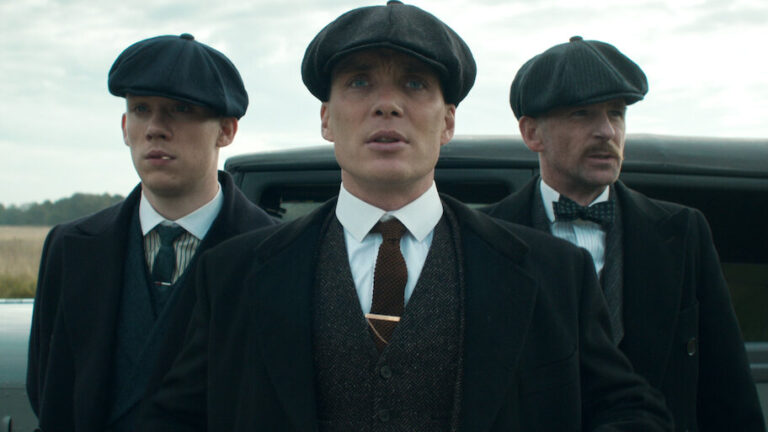

For Yorgos Lanthimos’ film Bugonia, casting director Jennifer Venditti faced one of the project’s most nuanced and rewarding challenges: finding the right actor to play Don, the neurodivergent cousin of Jesse Plemons’ Teddy — two conspiracy-obsessed cousins who kidnap a CEO (Emma Stone) they’re convinced is actually an alien.
The role of Don was always envisioned by Lanthimos to be played by someone who is on the spectrum. The result was the feature acting debut of Aidan Delbis, a neurodivergent young man who makes his feature acting debut opposite Plemons and Stone. In this conversation with Casting Networks, Venditti walks us through the sensitivities, the process and the care that went into casting this pivotal role.
Key Insights
- Bugonia was intentionally cast with a neurodivergent actor in mind, with extensive safeguards to ensure the role would not be emotionally or psychologically harmful.
- Venditti partnered closely with an access coordinator to evaluate readiness, support needs and long-term well-being throughout the audition and filming process.
- Aidan Delbis stood out by remaining grounded, adaptable and creatively present alongside seasoned actors Jesse Plemons and Emma Stone.

Throughout your career, you’ve made a name for yourself casting non-actors — from Euphoriato the films of Josh and Benny Safdie, including Uncut Gems, and more recently Benny’s Marty Supremeand Josh’s The Smashing Machine. Did the role of Don in Bugoniacome with specific sensitivities?
Yorgos always knew he wanted the role of Jesse’s cousin to be played by someone neurodivergent, and I’ve worked with that community before. Jesse and Emma are like a masterclass in acting, so we wanted the person playing that character to be someone who could be present in the experience, rather than driving the experience. After reading the script, I knew it would be a challenge, because you don’t want to put someone (who is on the spectrum) in a situation that might traumatize them.
What were some of the initial considerations or precautions?
I worked with an access coordinator who works with autistic and neurodivergent people, making sure the environment is supportive for someone that might experience it differently than non-neurodivergent people.
We went through lots of Zoom auditions, and going through various phases of vetting them in terms of, can they handle this material? Can they handle the events that happen in the film? Can they handle living in this environment for this amount of time away from home?
We take it very seriously because we don’t want to put someone in a situation that is not good for them.
How did you and the access coordinator work together to prepare Aidan for any potential challenges in the material or on set?
She took Aidan through all the steps, explaining any potential challenges — things like, “Hey, there might be loud sounds or bright lights.” After we went through all of that, Aidan went to Los Angeles and did a camera test. Then we did a workshop with Jesse, went through scenes, did lines, did improv and every single step of the way, he passed with flying colors.
What made Aidan stand out during the process?
It was a perfect fit. He was not disturbed at all by the material, which is very rare because I saw a lot of people that would have been. He was very okay with being away from home in another country. He was able to add his own thing to the material. He and Jesse had a beautiful bond, and Jesse was so incredible with him.
Your work with both neurodivergent actors and the Safdie brothers brings to mind their 2017 film Good Time, about a small-time criminal (Robert Pattinson) trying to free his developmentally disabled brother from police custody. In that film, Benny Safdie played the brother, meaning a non-neurodivergent actor took on the role. How did that experience compare?
We had initially gone through the process of seeing neurodivergent people for the role, but ultimately felt [the expectations of that role] might be too traumatizing. You really have to be responsible about it. We realized we couldn’t cast someone [on the spectrum], so Benny played that part, and it was great.
Key Takeaways
- Authentic representation in casting requires time, patience and a deep responsibility to protect the actor’s well-being.
- Access coordinators are essential collaborators when working with neurodivergent performers on complex material.
- Inclusive casting succeeds when actors are supported to be present, not pressured to perform beyond their comfort or capacity.