
As usual, Sunday’s big game was as much about the commercials for most people as it was about the football. The most anticipated advertising showcase of the year gave us lots of new spots, some of them great, others not so much, and a sizable percentage of them were for AI companies. Almost one quarter of all the ads were AI-related, a number one would think will only grow with each year.
Key Insights
- AI appeared in nearly one quarter of Sunday’s ads, marking its most aggressive mainstream advertising showcase yet.
- Brands used AI for de-aging, digital cloning, synthetic image generation, and even AI-written scripts, blending real performers with machine enhancement.
- While AI amplified spectacle and nostalgia, weaker executions proved that technology still cannot replace sharp creative judgment.

But artificial intelligence was far more widespread than those specific entities. The technology showed up again and again in those spots and others using actual humans. Both creating fake people and de-aging real ones. It was without question the most artificially enhanced run of ads in history.
Some were entirely AI-generated, like the Svedka commercial with the company’s Fembot mascot, others used AI to change or enhance real actors.
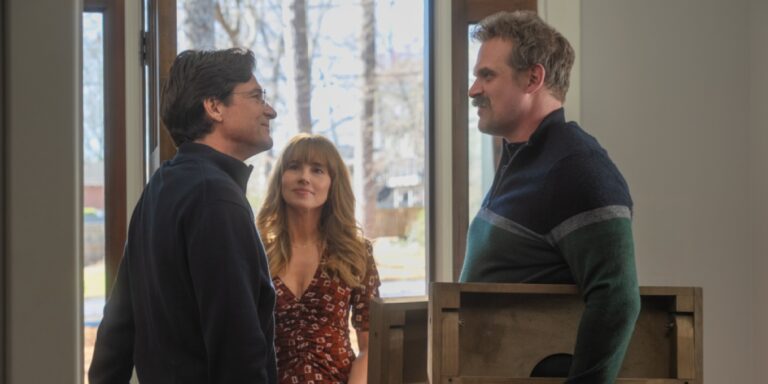
Take Ben Affleck’s Dunkin’ Donuts commercial. The cleverly conceived — but somewhat cringey — piece that reimagines Good Will Hunting as a 90s-era sitcom with Affleck playing Will featured real actors on a real set. Jason Alexander, Matt LeBlanc, Ted Danson, Alfonso Ribeiro, Jaleel White, Jasmine Guy and of course Jennifer Aniston and Tom Brady, were all, shall we say, enhanced by AI to make them look more like their younger selves.
Similarly, Xfinity’s Jurassic Park spot de-aged Jeff Goldblum, Sam Neill and Laura Dern to something approximating their appearances 33 years ago, but did so rather poorly. The result was a distraction from what was meant to be a funny re-imagining of how successful the park would have been with better wifi.
Ramp made dozens of copies of The Office star Brian Baumgartner for its spot celebrating the company’s AI-powered spend management platform. The joke was there were so many versions of him — including one that carried a pot of chili, thus paying tribute to his most infamous moment on the classic sitcom when his character, Kevin, tried to share a batch of his chili with his officemates, only to spill a giant pot all over the carpet — that all the work he had to do was made effortless.
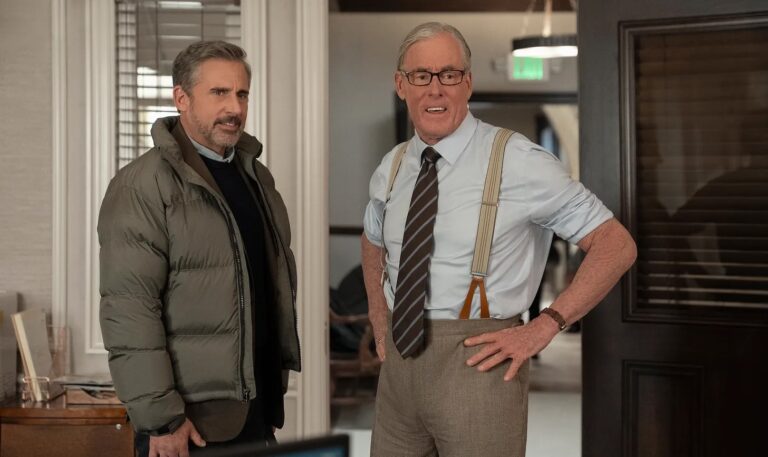
Matthew Broderick’s Genspark commercial about using AI to do work for people to allow them the day off — gave us an unintentionally creepy look at our potential future of being replaced by machines, but with a Ferris Bueller’s Day Off vibe to it, which may have made it even worse.
The spot used all human actors, and was apparently written by an AI engine. It would be easy to say writers beware, but the spot’s quality shouldn’t raise any alarms. Yet.
One of the best commercials both touted the advances in Amazon’s Alexa and made fun of it, with Chris Hemsworth detailing to his wife — fellow actor Elsa Pataky — the many ways in which Alexa might kill him. They included wrestling a bear, getting bitten by a snake Chris had previously wrangled, and getting blown up, all of which were represented with AI.
All of these ads were shot conventionally, with real people on real sets, each of them just enhanced somehow. Or, in the case of the Genspark ad, created artificially.
Google’s new image generation technology showcased a mom using the tech to show her young son what their new house could look like, so as to make him feel better about their impending move, and Meta/Oakley teamed up to show digitally enhanced activities as a way to demonstrate their new smart glasses.
And then there was Microsoft, which featured a football coach using Microsoft Copilot in Excel to find the best linebackers for his program, though this one gets an asterisk because it had already been airing for several weeks.
The designers of artificial intelligence keep telling us that AI is the future, and that may be partially true, but when it comes to creativity, the human factor will always be integral. So take that, Skynet.
Key Takeaways
- AI is no longer experimental in advertising; it is becoming a standard production tool across major campaigns.
- De-aging and digital replication raise new performance, branding, and ethical considerations for actors and studios.
- Despite rapid AI integration, the most effective commercials still relied on strong human-driven concepts and storytelling.