

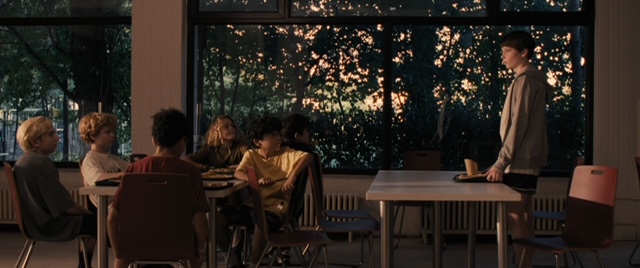
It’s not often that a movie comes along that makes you think about some of the darkest moments of your childhood, but is so good that you can’t turn away from it. Those kinds of films come along once in a great while, and the newest entry on this limited list is writer-director Charlie Polinger’s The Plague.
Starring Joel Edgerton and a group of unknown 12- and 13-year-old boys, it follows Ben, a socially awkward kid who endures the ruthless hierarchy of teenage boys at a water polo camp. The film is often extremely difficult to watch, but at the same time is always eminently watchable, if that makes sense.
It also introduces a group of talented young actors, particularly the film’s three leads, Everett Blunck, Kayo Martin and Kenny Rasmussen, each of whom shine. Polinger and Edgerton chatted with us about all of it.
Key Insights
- The Plague draws from Charlie Polinger’s personal experiences with childhood group dynamics, morality, and ostracization.
- Joel Edgerton joined the project to help ensure the film was made, drawn to its honest portrayal of teenage cruelty and conscience.
- The young cast—including Everett Blunck, Kayo Martin, and Kenny Rasmussen—was discovered through an expansive audition process that prioritized authenticity.

Charlie, where did the idea come from?
Charlie Polinger: This notion of The Plague was based off a thing that I experienced growing up where I found it very hard to navigate fitting in with a group, and also feeling like I was crossing lines I didn’t want to cross morally, and seeing how people would be ostracized.
I would want to try to do something about that, and the group would turn on you when you did that. I experienced that multiple times, and when I started writing it, I was calling a lot of my guy friends and asking them about their experiences at camps and at school, and hearing a lot of really similar stories.
I just felt like I hadn’t seen this portrayed in a movie before, and it felt like something that I really wanted to explore, and bring as personal an approach as I could to it.
Joel, what got you involved? Because while you have a strong presence in the film, it’s clearly a supporting role.
Joel Edgerton: I really wanted to see the movie get made. A mutual friend of Charlie’s and mine had sent me this script saying, “I think you’re going to really like this screenplay.” The first movie I directed, The Gift, dealt with similar themes, and I was always really fascinated by this formative age of being a young teenager, when you first start to realize how you can affect each other.
I thought Charlie had done such an incredible job of creating a relationship between the three boys, particularly. The ringleader of these bullies, and a boy coming in the center of this wondering, “Do I be kind to the kid that’s being victimized? And how much does that put a target on my back?” I was just taken with the script, and I’d seen Charlie’s short films, and wanted to do whatever I could to help make sure that the movie got made.
I’ve spent most of my life playing supporting roles and happily doing so, and it was nice to be this ineffectual adult force within a movie, just to help underline that children will govern themselves, despite what real world regulations and adult person might put on them.
Did you have a coaching role behind the scenes as well with the boys?
JE: It was like art imitating life. Or life imitating art. (Laughs) On one hand, I always feel, as a grown-up, coming into a movie with kids, that it’s nice to remind them that just being in a movie doesn’t make them all that special.
Not to diminish their feelings of themselves, but just to say, “Look, just because you star in a movie doesn’t mean you can go out into the world and tell your classmates that you’re any better than they are.” So I feel like a bit of a parental figure with [these] kids, and I like to connect with their families as well. Just [to] let them know that I’m there to hopefully be a good influence.
But interestingly, the life imitating art was that Kayo Martin is so extraordinarily good at disseminating and tearing people down. That beautiful scene that Charlie had written where I’m trying to instill this value of kindness to them.
He got so under my skin that I felt bullied. (Laughs) I had a really interesting relationship with the kids, where I on one hand was there to help, guide, nurture and encourage them. But then also I had a target on my back, so it was kind of fun, for the sake of the movie, that I was a bit traumatized myself. (Laughs)
CP: And I think that scene, which is very funny, is one of the scarier scenes of the film, because the way that Joel’s trying to keep it together, and they’re just running circles around him, and then he snaps. I remember as a kid, if the adults got angry, it felt like they were not in control. At that point, it feels like anything can happen. It really is a pivotal turning point in the film.
You talked about Kayo, and along with Everett Blunck and Kenny Rasmussen, there are a lot of kids who are basically newcomers. Can you walk me through the casting process?
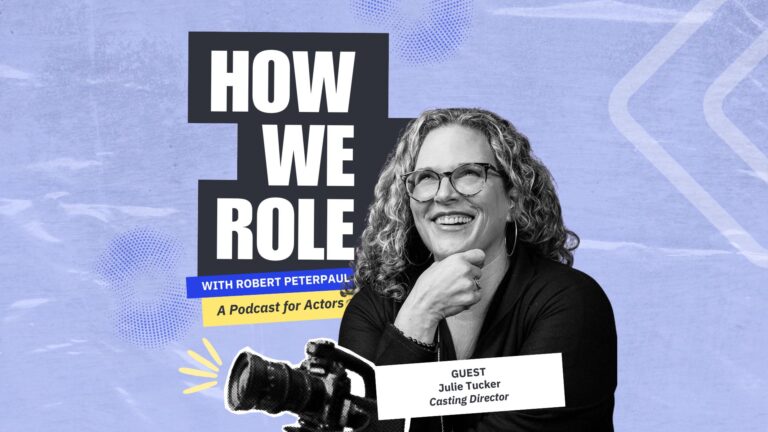
CP: Our casting director, Rebecca Dealy, and I talked a lot about each of the characters, and I even showed her photos of people from yearbooks and inspirations for the roles. But I also said I wanted to keep a really open mind, and it could be someone who’s not what I’m imagining, but who surprises us, so let’s cast the widest net possible.
She just reached out to anyone at any level, and anyone who wanted to audition would submit. Along the way, I would send tapes to Joel, and it’s pretty wild to watch it, because usually within five seconds it’s clear. We probably saw 3,000 tapes. Kenny, who plays Eli, was maybe in the first 10, and I remember seeing that tape, maybe two lines into the scene, and I knew this was Eli.
I found Kayo on Instagram, actually. I had seen his videos going around New York, being a little skateboarder punk, making fun of people, going to that Mike Tyson vs. Jake Paul show, making fun of them, the moderator yelling, “Where’s this kid’s mom?”
I thought, “Let’s track him down.” He came in and he was making fun of us in the room. He went over to give me a high-five, and then pulled his hand back and laughed at us. We were like, “Okay, this if he’s willing to put in the energy and the focus to really learn how to act and to focus on the lines, he’s perfect.” And then he did. He really rose to the challenge.
JE: Can I say something that I found really potent about it? Every time I ever watched a movie with a bully, they’re always bigger than all the other kids. They probably were on the football team and they had a flat top, and Kayo’s a smaller kid who is just a master of tying you up with words and finding your weakness and reflecting it, too.
He has a natural ability to dismantle people, and he’s such an unorthodox view of what you would expect from a bully that I thought it was extraordinary casting. But I also love that the spirit of the group’s cruelty isn’t for the sake of cruelty alone, which I think it’s important to differentiate. Intention is different from impact.
You might go, “Oh, we were just having fun,” but you guys having fun together actually is destroying someone’s morale or their mojo or their spirit for living, but I don’t think kids often go out with the intention of wanting to make someone unhappy. We want to entertain ourselves, and this is an easy target. The result is actually quite devastating, and it’s hard to not see that as personal when you’re on the receiving end of it.
Joel, what was it like working with a bunch of kids like this?
JE: I’ve been talking about this a bit lately. W.C. Fields said never work with animals or children. I completely disagree with him. Every time I’ve worked with kids, as much as you think you can learn from older actors, there’s actually so much to be learned from kids and their looseness and their freedom.
I think Everett is an extraordinary kid who actually reminds me of the way I used to view Mia Wasikowska when she was a young actress — so natural. Kayo, for a first major outing in a film, to light up the screen in such a dynamic way, it’s a reminder to let go. Some people approach acting as if there’s some way of going about it, and there’s a purity, effortlessness and ability to play that kids have.
The great thing about this material, and what I found similar with The Gift, is we all were either bullied or we were part of the mob mentality, or we were bystanders that watched drama play out, but we all went through something, and I always feel like school can be joyous for some people, it can be trauma, and we all witnessed it, whether we were the full receiver of it or not, or we bear the guilt of the things that we might have done to fit in.
So I see this as a very important film, and is really potent and special for that reason. I can tell why it’s a tough watch for people.
Charlie, when you make a movie, you just want it to be seen. This one will be, so what do you hope that it will accomplish?
CP: When I show this at festivals, people come up to me and they’re often, if not triggered, it’s brought back memories of their childhood and things they tell me that they haven’t thought about for decades. I think to bring these things up and question them again, but to then be able to create a conversation about how this might apply, not only to how boys are and how kids are, but to how cultures can behave, how group dynamics can form and crystallize.
The fact that this dumb game of The Plague that no one takes seriously can suddenly become a thing that completely spirals into something very cruel and very intense and violent, and that even though the individuals of the group don’t necessarily take it that seriously as a collective, it can become something that is very real and very damaging and have the same impact as something that is as real as a serious disease, in this case.
So I think that that opens up questions about how a society works, and how a culture works, and how we navigate that strong pull to want to belong. I see that everywhere, from politically and socially and with different countries. I think to be able to get people watching this film and thinking about very personal stories.
But, hopefully also thinking a little bit more broadly, just about what is their place as an individual, and in a group? I see people leaving the theaters and talking about the movie and about their experiences when they were young. That’s the thing that’s most exciting to me, is that it’s creating conversations.
Key Takeaways
- The film resonates deeply because it mirrors universal memories of adolescence, belonging, and the emotional cost of conformity.
- Its portrayal of bullying highlights the gap between intention and impact, showing how “harmless fun” can devastate its targets.
- Polinger hopes the film sparks conversations about how individuals behave within groups—whether in childhood, communities, or society at large.