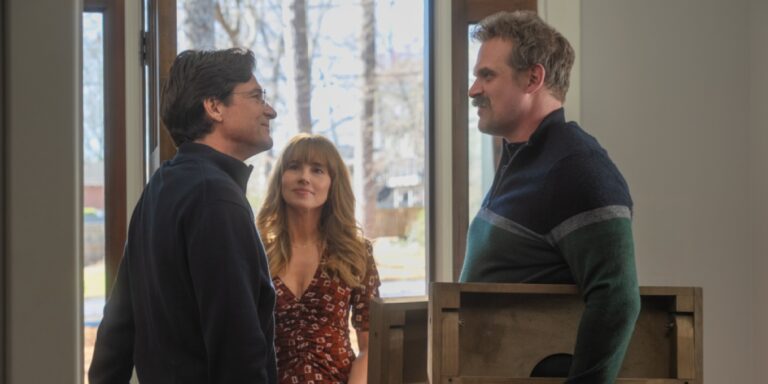

Vertical shorts are a wildly popular format of storytelling. Designed for binge-watching, these high-paced, soap-opera style videos are produced in 9:16, specifically for mobile-phone viewing.
Originating in China, vertical shorts have become massively popular, with audiences emerging across the U.S., India and the Philippines. Episodes are between 1-3 minutes long, with up to 50+ episodes per series. They are designed to be consumed in short bursts, and their popularity has launched a number of specialized apps, including ReelShort, ShortMax and DramaBox.
The production of vertical shorts have even begun to fill the gap left behind by the 2023 Hollywood strikes. In the entertainment industry, national employment saw a 17% drop, with many actors reporting a slow recovery to a pre-strike era. So in this reduced production environment, vertical shorts have provided a lifeline for both actors and crew.
They’ve offered vital experience, proving to be a reliable source of income. Many actors have even been able to build a fan-base through social media, increasing visibility and championing a direct-to-audience avenue for exposure.
Key Insights
- Vertical shorts are a serialized form of storytelling. Episodes are between 1-3 minutes and 50+ episodes per series.
- Productions are often low budget, involving 12-hour shoot days, with 10-15 pages of dialogue per episode.
- They consist of exaggerated themes around romance, revenge, Sci-Fi and horror, and are often melodramatic in style.

What Exactly Is a Vertical Short?
Vertical shorts (or micro-dramas) are a short-form video format intentionally produced to be viewed on an upright phone. Episodes are usually 1-3 minutes long, and 50+ episodes per series, catering to on-the-go viewing.
Typically, they are low-budget, produced in a rapid production cycle, involving specialized scripts written specifically for the genre. Themes often follow a soap-opera style, focusing heavily on romance or revenge plots.
Most are available via social media on TikTok or YouTube, but in recent years they have mainly been streamed through dedicated apps like ReelShort, ShortMax and DramaBox. These apps offer free episodes, before a paywall prompts users to unlock further content.
How to Audition For a Vertical Short
Auditioning for a vertical short is typically done through self tape. Actors must film vertically, to match the final viewing format, and it’s helpful to film in a tight frame, to convey the character-driven story. Audition sides are often intense, requiring high energy.
The quick turnaround nature of production means that the casting process is condensed, too. Chemistry reads for lead roles can happen over Zoom, and the process involves looking for “types,” rather than experience. Although some producers may require special skills for certain projects, most vertical shorts facilitate an open audition process.
Castings can be found most frequently through Actors Access and Backstage. Most breakdowns will include the storyline, as well as the character descriptions, so you can prepare your audition with as much information as you would any other.
Style and Genre
The themes involved have been dubbed as “soap-opera” style, with sometimes outlandish and nonsensical storylines. The genres can range from romance and revenge, to sci-fi and horror. Some contain a crucial twist, with high stakes of a melodramatic nature.
They are designed to keep viewers engaged, so the episodes might have an emotional hook/shock or a fantasy aspect. The accessible nature of a vertical short can compact high-intensity storytelling. Storylines often involve revenge and redemption, or involve the supernatural.
Some of the most popular vertical shorts are “The Return of My Drama Queen,” “The Double Life of My Billionaire Husband” and “Claimed by the Alpha I Hate.” For an actor, the diverse range of stories can help build your skill set, allowing you to play a wide range of characters in a short amount of time.
In Production
Originating out of Asia, vertical shorts are now largely produced in the U.S., with hubs across LA, New York, Atlanta and Toronto. The process can be an intense training ground for an actor, with pre-production typically taking place between 3-4 weeks. Filming is usually within 7-10 days, and the total production concludes within 1-2 months or less.
Despite the low-budget, shoot days can be up to 12 hours, with 10-15 pages of dialogue per episode. Actors are often expected to learn lines quickly with minimal preparation time, and directors are limited to one or two takes per scene. Actors are paid within the range of $100 to $500 a day, with some lead roles paying up to $1,000 a day, with negotiations.
An estimated 30 to 40+ vertical shorts are currently in production just in LA, and major platforms like MyDrama are always scaling up. The current market is projected to reach $14 billion by 2027. This level of growth led SAG-AFTRA to launch a specific Verticals Agreement in late 2025, ensuring performers receive protection, fair pay and safety standards on productions with budgets under $300,000.
What Are the Potential Risks?
Before signing up to work, it’s important to consider the risks. As vertical shorts are a newer form of entertainment, there is a stigma attached to them. Production, as well as audience consumption is fast paced, so there’s a generalization that assumes the quality of production has been compromised. Sometimes poorly written scripts can denigrate their artistic value.
Some contractual risks require signing perpetual rights to an actor’s likeness and lack protection surrounding the use of AI. At the moment, there are no residual payments available; instead actors receive a one-time buyout, even if a project goes viral or is later sold for millions. While this is subject to change, currently there is no long-term benefit, with performers rarely receiving additional compensation.
There isn’t anything inherently bad about working on a vertical short, but you should be aware of the risks before you sign up. Read through your contract, verify if the production is a part of SAG’s Verticals Agreement. Additionally, think about the project in the simplest terms: Does it add valuable experience? What do you stand to gain financially? And how does this project elevate your career?
What Is the Future for Vertical Shorts?
There is explosive growth potential for vertical shorts. The industry has adapted swiftly to them and (if we aren’t already), someday we all may be viewing entertainment in 9:16 aspect ratio. Some of us use streaming apps on our phones already, and vertical shorts were just the first to be specifically created to accommodate this habit.
The style and content has even evolved since their emergence. While most are still stylized and dramatic, some productions are combining entertainment with education. Audience-driven future content will use data to help understand fan preferences, and this will likely result in a quality shift. The current market expansion could even see integration between major studios and streaming platforms with vertical producers.
However you feel about working on a vertical short project at the moment, and the status of them as a whole, think about the changes the industry has adapted to in the last ten years. Self tapes, streaming services and using social media to make your own content were once unheard of. While it may take time to see vertical shorts as industry-standard, eventually everything finds its place and its audience.
Looking for vertical shorts audition opportunities? Browse current casting calls: