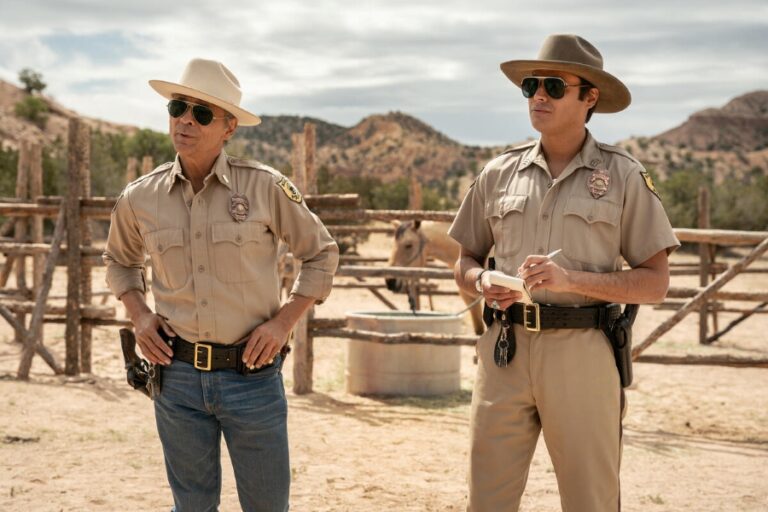

Dark Winds is a psychological thriller series on AMC that recently began its fourth season. Based on Tony Hillerman’s novel series Leaphorn & Chee, the show is set in the 1970s and follows three Navajo tribal police officers, Lt. Joe Leaphorn, Jim Chee and Bernadette Manuelito, as they solve crimes on their reservation amid a surge of increasingly violent cases.
Key Insights
- Professional relationships often open doors, as many Dark Winds cast members landed roles through years of collaboration and industry connections.
- Preparation remains a defining factor in booking work, with actors emphasizing memorization, training and arriving fully ready for auditions.
- Casting Indigenous talent can require creative approaches, including discovering new performers directly from Native communities.

Native American actor Zahn McClarnon stars as veteran tribal police lieutenant Leaphorn, with Kiowa Gordon as undercover FBI agent-turned-deputy Chee, and Jessica Matten as tribal police sergeant Manuelito. This season, the trio moves from the Navajo Nation to the gritty streets of 1970s Los Angeles to find a missing Navajo girl before an obsessive killer does.
McClarnon is also an executive producer alongside a notable list of EPs, such as George R.R. Martin, the late Robert Redford, director Chris Eyre and Hillerman’s novelist daughter Anne Hillerman.
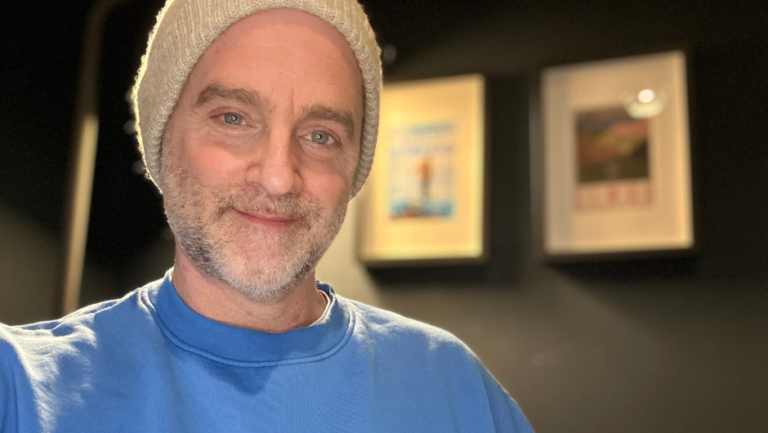
Casting Networks had the opportunity to spend time with the trio to talk about casting. McClarnon, who is very much involved in the casting process, explained that the show works with casting director Rene Haynes (Killers of the Flower Moon) in Los Angeles and Jennifer Schwalenberg (Rez Ball), who does the local casting in Santa Fe, New Mexico. Both, he noted, have extensive experience with Native talent and have been invaluable to the series.
Finding talent within the Native community can be challenging, McClarnon acknowledged, saying that production aims to hire Indigenous actors, specifically Diné (Navajo), but that has presented its share of difficulties. “There’s not a big pool of native talent out there,” he noted.
Due to those limitations, production has at times cast Native non-actors from the reservations. Sometimes that means limited exposure to acting classes and on-set experience, but it can also yield some genuine surprises.
“It can be difficult to do, but we’ve been successful at it, and found some on the reservations, especially the young kids,” McClarnon offered, adding that younger actors can be refreshingly unencumbered. “I think kids have a lot more freedom and allow themselves to play a lot more,” he continued.
McClarnon recalled a young actor in season 3 who really impressed him. The boy arrived to set with his parents and shared a scene with McClarnon. “He was an amazing kid to work with. He was just a natural at it, and he had fun on set, and he enjoyed the process. There was a freedom to him. That was amazing to me.”
Gordon’s path to Dark Winds involved a traditional audition, aided by relationships built over the years. The actor first met showrunner Eyre at an Indigenous film festival, where Eyre told him about a project in the works involving George R.R. Martin. Months later, the LA-based Gordon was invited to audition; he went to Hot Shots Self Taping in Studio City, California, to put a scene on tape.
After subsequently booking an episode on Reservation Dogs and shooting in Oklahoma, he learned that an offer for Dark Winds would be coming. It also didn’t hurt that Gordon had previously worked with McClarnon on two Jason Momoa-led series, Frontier and The Red Road.
“It’s always tough to get a series regular gig as an actor,” he said. “I probably wouldn’t have got this job if I didn’t meet Chris Aaron [at that film festival] or if I didn’t [previously] work with Zahn.”
Matten, who also worked with McClarnon and Gordon on Frontier, equally stresses the importance of professional relationships. “The three of us had worked together before, and had known each other for a decade prior, so people pay attention to that,” she pointed out.
She echoes McClarnon’s view on the limited Native pool in casting and what that means for an actor’s reputation.
“Our Indian country is small, so we kind of all know each other, and our reputation does matter,” she emphasized. “Are you prepped? Are you going to create drama? You really have to be a professional and understand that there’s an entire business working around this and that it’s not about just you as the actor. You are a puzzle piece in this very diverse, gigantic production. I think you will extend the chances of your career in this business if you come at it from a business point of view and understand that it really is a team effort.”
Matten, who landed her Dark Winds role “after a second taping on my broken ring light,” also states that auditioning can often be harder simply because she’s a woman, which is why she believes female actors must always bring their A game.
“You’re not necessarily competing against other women,” she observed. “If you think about it, you are literally trying to prove your position on a male-dominated, male-written show. That’s just historically how it’s gone.”
Despite a resume that includes lead roles and producer credits, Matten reveals she typically gets only five auditions a year. Which means when those do come up, she arrives fully prepared, lines memorized, and no script in hand.
“I know they say ‘hold your sides’ and read off it, but everything I’ve booked has been off being super prepped, and being completely off book,” she stated.
McClarnon underscores the value of preparation for any actor, and credits it in part to his own success.
“I studied my butt off,” he revealed. “I moved to Los Angeles and dedicated my whole life to acting and being in class three or four times a week sometimes, and continuing to do that. I embedded myself in the career.”
Key Takeaways
- Build and maintain genuine relationships across the industry because collaborations often circle back years later.
- Treat every audition like a rare opportunity by preparing thoroughly and arriving completely off-book whenever possible.
- Approach acting as both an art and a business by maintaining professionalism, protecting your reputation and committing to ongoing training.