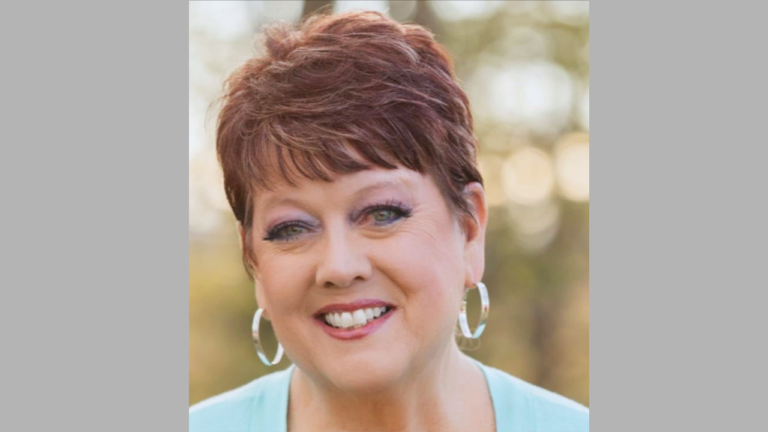

It’s pretty rare to have a front-row seat to the evolution of an entire film genre. You’d have to be very good at your job, and also more than a little lucky to find yourself in the right spot at the right time. Beverly Holloway is both, as she has helped to turn faith-based films from a punchline into one of the most lucrative genres in the film business.
It was at least partially due to her vision that we’ve seen faith-based films explode over the last decade, though she is far too humble to acknowledge that. She has over 150 credits to her name, with the latest, the sequel I Can Only Imagine 2, currently in theaters. She spoke to us from her home in LA.
Key Insights
- Casting director Beverly Holloway emphasizes that actors don’t need to share the same beliefs as a project, but must genuinely respect and connect to the story.
- Preparation goes beyond memorization, as understanding the filmmakers and their work can give actors a meaningful edge.
- Authenticity consistently outperforms trying to fit a perceived mold or “perfect” version of a character.

How did you get into casting?
Well, it was a little bit of a roundabout way.
It usually is.
(Laughs) Yes, I had a friend who was a filmmaker, and I had done other careers. Directing community theater, youth theater, producing shows. I had that creative heart, but I really didn’t know anything about the film industry. I went to my friend and said I thought it could be an area that I could be good at. I’d love to just intern. I was 30, and just started over as a $50 a week intern.
Okay, so then how did that transition into casting?
He’s the one who suggested it. He put me in that role before I ever really understood it was an option, if that makes sense.
I jumped in and figured it out and learned on the job. It was great. It just was one of those wonderful things that grew organically. For me, being a person of faith, I like to say that God sort of planted me in there, and then I just walked through the steps as they came to me.
What was it that spoke to you about casting once you figured out what it was?
I love actors. I love working with actors and understood them, and so I really enjoyed that community of people. There was a little bit of a continuation of my directing roots, and also, my father was an engineer, my mom was an interior designer. I literally think I have a split brain.
I hear that a lot, the creative and the clerical going hand in hand.
I’ve actually seen pure creatives struggle with the casting part of it, just because you’d like to think that every decision is purely creative bliss, right? But of course, we’re taking into account scheduling and budget things and how family groups look together, and heights, and, you know, a lot of things that have to go hand in hand with the creative decisions as to the actor’s performance.
That can frustrate some people who I think are purely creative. So I do think casting is a great mix of both of those worlds.
You mentioned your faith, and I’m glad you brought it up, because I was going to ask you about the films that you make. Much of your work is in the faith-based world, and while they don’t tend to get the same level of respect as other genres, it’s incredibly lucrative and you never stop working.
Yeah, that’s true.
Did you get into it as an intentional move because of your own faith?
The filmmaker who got me into this was a friend from church. That very first project was actually for an organization called Youth With A Mission. That was the kind of content he was making, and of course, that was consistent with my own personal faith, and I loved being a part of stories that made people feel better, or met them in a time of need.
It just grew, and the films grew. I’m now going into my 32nd year, my career has grown as the faith, family, inspirational industry has grown, and it’s kind of a perfect mirror of that. I just inadvertently became an expert. I didn’t set out to be. It’s just I was in it in the early days, so as other filmmakers came up behind me. I had more experience and I could help guide them.
Was there ever a conflict or a struggle with this direction?
Yes, there was a time where I butted up against it, because I saw other casting directors doing films that were mainstream and more readily accepted. In the early days, I did have to explain what it was and why it had value, talking to agents and actors to help them understand, really, what these things were and the impact. But I did butt up against it because they weren’t hip and cool and, you know, you don’t get awards for them. But I was passionate about it, so I became a champion for it in the agency talent world.
Trying to really help them understand why actors who didn’t have that same personal faith belief or faith journey could still understand the value of encouraging another human being or sharing someone’s inspirational, true story, and just realizing the positivity, the power, the impact of that.
How have things changed for the genre since you started in it?
Faith films really got a bad rap for a lot of years, and rightfully so, because they were not great. The acting was horrible, because in most cases, these filmmakers had no money, and so they were casting from their church or friends or whatever.
So they kind of just did the best with what they had. My mission was, no, let’s go out of our little circle to get the best actor. Let’s bring up that quality. Because if we truly believe we’re telling the greatest stories out there to tell and and we are excited about telling them, then we’ve got to do it well.
We’ve got to do it with excellence. Bringing SAG to a lot of films to up the quality. What’s exciting is that there are filmmakers now who are really bringing beautiful filmmaking, people who are matching that level of quality. And when you get all the pieces together, great actors, great visuals. It’s really exciting. It really is so satisfying.
Do you have a type of actor you go for? I mean, does someone have to be a Christian or a believer to be in your projects?
The audience embraces actors who are great. There is an element of an added positive with someone who either has the same faith journey or the same belief system personally, or someone who respects it and embraces it. But really, we just want actors who love the story, love the craft, love the film and the team and all of that, and respect the audience, regardless of their own personal journey.
There are people who, maybe they’re at a different place in their life, or they become parents or grandparents, and all of a sudden they want to do something that their kids can watch, that they can feel good about. There’s a lot of reasons why people resonate with the material, and we just want to find those people who want to be there, that it’s not just a gig. [As with] any film, they want to know their actors are engaged on a deeper level and really passionate about it. So it’s the same for us.
It must be enormously rewarding to not only do something you love, but to be part of creating something that actually helps people.
When it’s hard, or when I’m frustrated or exhausted, at the end of the day I can say I’m helping to put something into the world that makes a difference, and whether that difference is just encouraging them that day, or providing a pathway for something for them to explore, or helping them feel like they can accomplish something, or that God’s just there and cares about them, for me, that matters.
With all that in mind, what piece of advice would you give to someone coming in to see you?
Do your research ahead of time. Look up the filmmakers. What are the kinds of projects they do? Understand the kinds of stories that they tell. I don’t want people necessarily to come in and feel like they have to clean themselves up or abide by a bunch of parameters. We just want the most honest, truthful performance.
I don’t want people to feel like they have to be something they’re not. We’re not looking for perfect people. We’re not looking for perfect Christians. We’re looking for great actors who resonate with the story and who resonate with the characters in an honest way, and who see value in the stories we’re telling and are willing to be a part of it and respect it. The rest we will figure out along the way.
Key Takeaways
- Research the filmmakers and project before auditioning so you can align your performance with the tone and intent of the story.
- Focus on delivering an honest, grounded performance rather than trying to guess what casting wants.
- Approach every role with respect, curiosity, and genuine engagement, because passion for the material is often what sets actors apart.